What Makes a Responsible British Bulldog Breeder in Australia
Covers what responsible British Bulldog breeding requires in practice, how to distinguish a program that is improving the breed from one that is producing registered litters, the role of genetic diversity, and how to build or access a program built on documented copy number strategy — for puppy buyers and breeders.
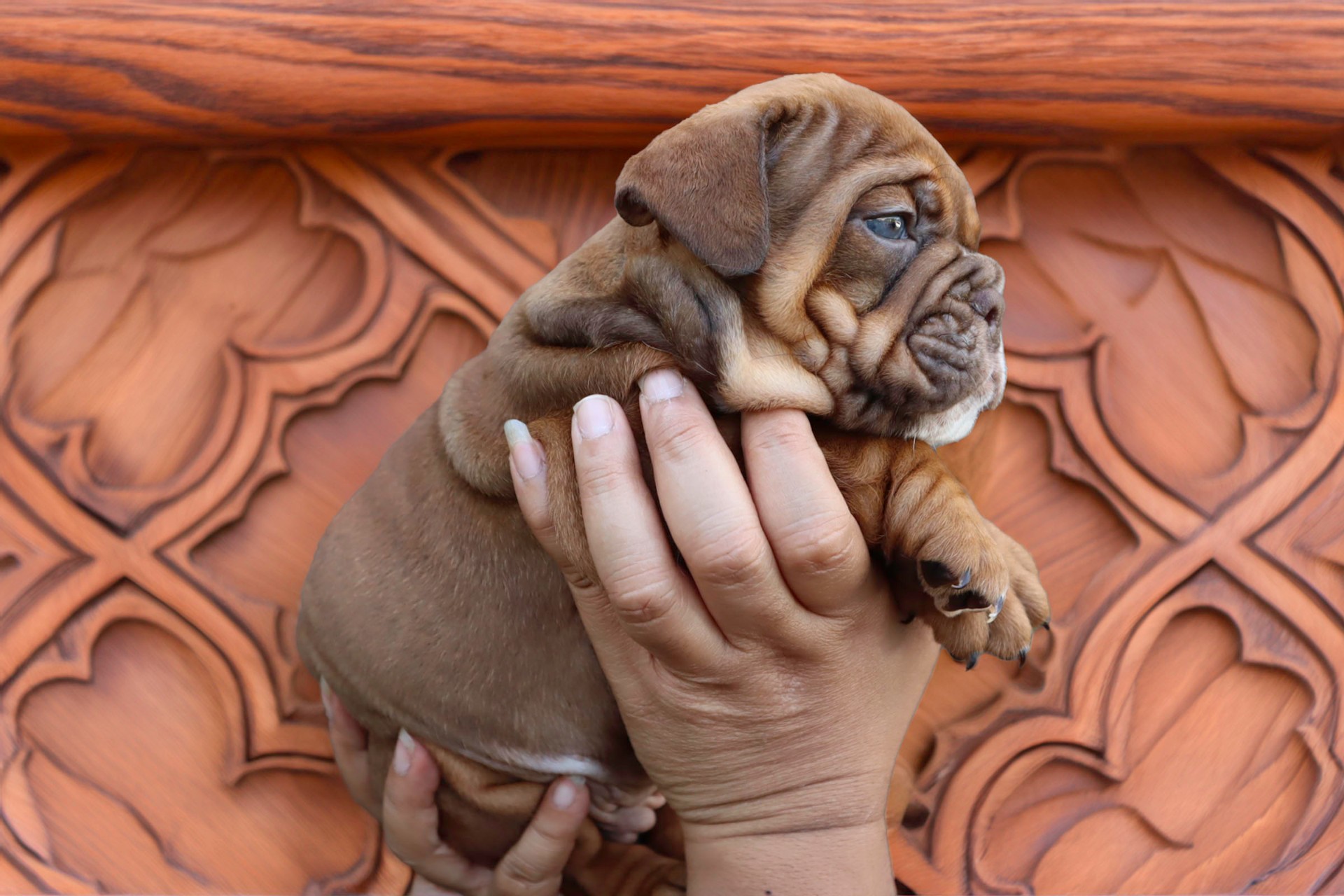
What makes a responsible British Bulldog breeder?
The MDBA (Master Dog Breeders and Associates) introduced mandatory ADAMTS3 testing for British Bulldog breeding dogs in 2020. Litter registration requires documented parent status for both dogs. A breeder operating within this framework has a verifiable record of every breeding dog's ADAMTS3 status — the baseline for responsible practice in this breed.
What distinguishes programs that are building toward something is what happens within that framework. Whether copy numbers are moving in a direction. Whether pairings are planned around what those copy numbers produce in the next generation. Whether the gene pool is being monitored for diversity, not just for registration compliance.
Responsible breeding is not a description of intent. It is a description of what those litters did.
“Responsible breeding is not a description of intent — it is a description of what those litters did to the gene pool.”
What does responsible British Bulldog breeding actually require?
ADAMTS3 was identified by Marchant et al (2019, PLOS Genetics) as an important airway oedema risk marker in British Bulldogs — the accumulation of fluid in soft tissue that further narrows a space already compressed by structure. . Copy number is inherited. What the parents carry helps inform the range of copy numbers the litter can produce.
The caesarean is not a routine procedure in this breed. It is the moment when cord tissue can be collected — when the ADAMTS3 sample that produces a birth-documented copy number is either gathered or not. A caesarean managed at a specialist reproductive facility produces documentation that a routine one does not. That documentation cannot be produced after the fact. The copy number of every puppy in that litter — including the one you are considering, or the ones your program produced — was settled at the moment of delivery.
A structured developmental program — age-appropriate stimulation and socialisation from birth through 8 weeks — produces a different puppy from one raised without it. Its effects appear in the dog. Its absence also does.
Each of these requirements produces a specific record. The record is what responsible breeding actually looks like.
How can I tell if a breeder is improving the breed or just producing puppies?
MDBA registration for British Bulldogs has mandatory ADAMTS3 testing requirements built in. Every registered British Bulldog breeding dog has a documented ADAMTS3 status. That is the baseline — and it means the gap between registering litters and improving the breed is visible in the documentation.
A breeder who has participated in the Breeding Brachys for Health program long enough — and who made pairing decisions based on copy numbers — has documentation showing what those decisions produced over time. The copy numbers of the offspring. The pedigrees that show which dogs were paired and why. The direction the gene pool moved as a result — and where the puppy you are considering, or the breeding decisions you have made, sit within it.
A breeder producing registered litters has documentation that litters were registered. The record ends there.
“Producing registered litters and improving the breed are not the same thing — only one requires a documented program built around what the pairings were designed to achieve.”
What role does genetic diversity play in responsible British Bulldog breeding?
A zero-copy dog mated with any dog, regardless of copy number, produces no puppies affected by this condition. This is what makes 0-copy studs a practical mechanism for program-level change — they can be paired into any existing program and the offspring carry at most one copy. That is a meaningful shift in one litter, without restricting which females can be used.
The Breeding Brachys for Health program tracks pedigrees and monitors genetic diversity across the registered British Bulldog population. The goal is maximum zero-copy dogs who do not share a common ancestor in at least four generations. Diversity and health improvement are the same objective in this program — not competing priorities.
For breeders building a program over time, the question is not whether to use carriers in breeding. It is whether the copy numbers in your gene pool are moving in a documented direction — and whether you have the records to show what each pairing contributed to that movement.
The goal is not a gene pool of zero-copy dogs only — it is a gene pool where every pairing can be shown to have moved the numbers. That shift does not require removing carriers from your program. It requires one documented decision.
How do I build a responsible British Bulldog breeding program in Australia?
The MDBA's Breeding Brachys for Health program provides the framework: mandatory testing, pedigree tracking, genetic diversity monitoring. Registration and participation place your breeding decisions within a coordinated effort — and give every pairing a traceable record.
ADAMTS3 testing is conducted from cord tissue collected at birth. The sample is collected at delivery — it cannot be gathered retrospectively. For breeders establishing a new litter, the testing process begins at the caesarean, not in a laboratory weeks later.
Hollywood Bulldogs AUS offers 0-copy ADAMTS3 studs with fresh, chilled, and frozen semen available Australia-wide. Current 0-copy studs include Rusty (Triple Carrier Blue Fawn) and Bluey (Triple Carrier Blue Tri), with Big Meech (Full Suit Black Tri) and Buddy (Lilac Tri) coming soon. All are 6-Panel Clinical Clear. Collection is performed by reproductive veterinary specialists. For breeders wanting to introduce documented 0-copy ADAMTS3 genetics into an existing line, a 0-copy sire cannot transmit an ADAMTS3 risk allele to the litter.
Hollywood Bulldogs AUS is MDBA registered (Member #18715) and participates in the Breeding Brachys for Health program. Every breeding adult is ADAMTS3-tested, with results confirmed by an accredited Australian veterinary genetics laboratory.
Professional veterinary services are engaged on a fee-for-service basis where required. Cord tissue is collected from each puppy at delivery.
Testing is conducted by Dog Breeding Science, an Australian veterinary genetics laboratory in Redfern, NSW. Samples never leave the country.
Every pairing at Hollywood Bulldogs AUS is decided by what it does for the breed. One litter at a time.
“One 0-copy stud paired with any female, regardless of her copy number, produces no affected puppies in that litter — and creates the documented first step toward the gene pool you want to build.”
Australia's first documented 1-copy female
Australia's second documented 1-copy male
Australia's first documented 0-copy British Bulldog males
Largest collection of ADAMTS3-tested 1-copy and 0-copy British Bulldogs in the world
Key Takeaways
- Responsible British Bulldog breeding is defined by what pairings do to the gene pool over time — not by intent, self-description, or registration status alone
- The MDBA's Breeding Brachys for Health program has required mandatory ADAMTS3 testing for all British Bulldog breeding dogs since 2020 — litters cannot be registered without documented parent status
- A zero-copy stud paired with any female, regardless of her copy number, produces no affected puppies in that litter — making 0-copy studs a practical mechanism for program-level change
- Genetic diversity and health improvement are the same objective in responsible British Bulldog breeding — the goal is more zero-copy dogs without shared ancestry, not a gene pool without carriers
- A program improving the breed can show traceable pedigrees, documented copy numbers across generations, and pairing decisions made on the basis of what those copy numbers produce
- Fresh, chilled, and frozen semen from ADAMTS3-tested 0-copy studs is available Australia-wide for breeders who want a documented first step toward a healthier gene pool
Hollywood Bulldogs AUS is MDBA registered (Member #18715) and participates in the Breeding Brachys for Health program. Fresh, chilled, and frozen semen from ADAMTS3-tested studs — including 0-copy males — available Australia-wide. Puppies available on limited and main register, with full ADAMTS3 documentation from birth. For buyers. For breeders building a program on the same foundation.
Get in touchFrequently Asked Questions
About Hollywood Bulldogs AUS
Hollywood Bulldogs AUS is an MDBA-registered British Bulldog breeding program focused on evidence-led health selection, ADAMTS3 testing and transparent owner education. Educational content does not replace individual veterinary advice.
MDBA #18715
Continue Exploring the Program
Genetics & DNA
ADAMTS3 British Bulldogs Australia: The Science, the Research, and Why It Matters
ADAMTS3 is an important airway oedema risk marker considered in British Bulldog breeding decisions. This guide explains what current research shows, what ADAMTS3 testing can tell you, and why it should always be interpreted alongside structure, function and whole-dog assessment.
Choosing a Breeder
How to Choose a British Bulldog Breeder in Australia
If you have owned a British Bulldog before, you already know what a wrong choice costs. It costs in vet bills, in surgeries you were never warned about, in watching a dog you love struggle to breathe. This guide exists for people who want to get it right — and for people who need to understand exactly why getting it wrong is so costly.
Health Testing
British Bulldog Health Testing Australia: Why DNA Is the Only Honest Measure
A British Bulldog can look healthy. That tells you how it looks on that day, in that room. It cannot tell you what it carries. It cannot tell you what it will pass on. DNA testing answers the questions that phenotype cannot.