British Bulldog Genetics Explained: ADAMTS3, Inheritance, and Breeding in Australia
British Bulldog genetics explained for buyers and breeders in Australia. Covers ADAMTS3 copy number, what the test results mean for the puppy you are considering or the dogs in your program, how a zero-copy stud changes the inheritance math of any litter, Triple Carrier colour genetics, and how the MDBA Breeding Brachys for Health program structures genetic progress at population scale.
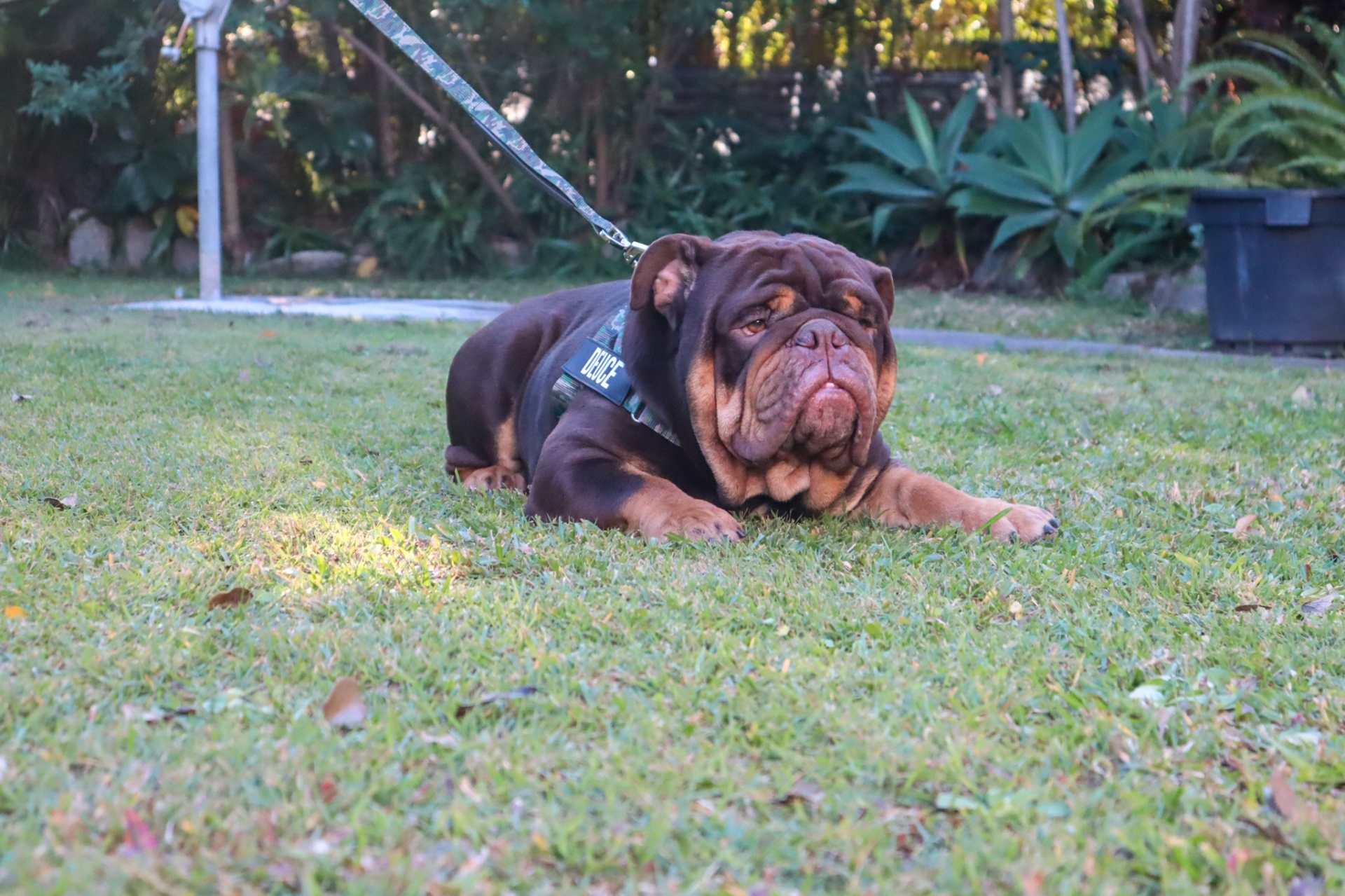
What does ADAMTS3 copy number mean in British Bulldog genetics?
ADAMTS3 copy number variation was identified as an important genetic marker associated with airway oedema risk in British Bulldogs by Marchant et al (2019, PLOS Genetics), who described it as associated with upper airway syndrome. The finding broadened the understanding of the breed's breathing: not simply an inevitable consequence of conformation, but a measurable genetic variable with a copy number that can be tested and considered in breeding decisions over time.
Copy number 0, 1, or 2. A 0-copy result means no copies of the tested ADAMTS3 risk allele were detected. A 1-copy result means one copy of the tested risk allele was detected. A 2-copy result means two copies of the tested risk allele were detected and, under this marker, represents the highest inherited risk category. ADAMTS3 status is one piece of information that informs breeding decisions; it does not by itself predict an individual dog's breathing outcome, which is shaped by structure, function, fitness, body condition and management.
ADAMTS3 testing from cord tissue — collected at the time of delivery — provides the earliest and cleanest sample available. Buccal swabs can be taken later. For a buyer assessing which puppy to choose from a litter, or for a breeder building a program, the copy number of every individual in that litter is one important piece of information the documentation should record alongside structure and whole-dog assessment.
“ADAMTS3 is one important genetic marker — interpreted alongside structure, function and whole-dog assessment.”
How is ADAMTS3 copy number inherited in British Bulldogs?
When a zero-copy male is mated with any female — regardless of whether she carries zero, one, or two copies — no puppy in that litter can receive more than one copy. A zero-copy male mated with a one-copy female produces a litter where each puppy is either zero-copy or one-copy, in equal proportion. A zero-copy male mated with a two-copy female produces a litter of all one-copy puppies. No puppy inherits the two-copy outcome when one parent is zero-copy.
Most British Bulldog breeding pairs in Australia today are both one-copy dogs. From a 1×1 pairing, the expected litter distribution is 25% zero-copy, 50% one-copy, and 25% two-copy. That distribution is an expected value — individual litters vary — but across a program, the proportion of each copy number in the offspring population reflects the pairing decisions made.
Pairing decisions that include at least one zero-copy parent lower the average copy number across a program. A zero-copy stud is one effective lever a breeder using an outside male can use to avoid two-copy offspring from that mating. These inheritance patterns describe ADAMTS3 results only; they do not on their own predict how an individual puppy will breathe, which depends on structure, function and whole-dog factors.
“A zero-copy stud avoids the two-copy outcome in that litter — one favourable factor among many in a breeding decision.”
What does an ADAMTS3 genetics test show for a British Bulldog?
Genetic testing for ADAMTS3 copy number is conducted by laboratories equipped for veterinary copy number variant analysis. Dog Breeding Science — DBS — is an Australian veterinary genetics laboratory based at 40 Boronia Street, Redfern NSW. The laboratory reports the puppy's ADAMTS3 result as 0, 1 or 2 copies of the tested risk allele.
At Hollywood Bulldogs AUS, cord tissue is collected at delivery by the attending veterinary team as part of the program's established collection process. Professional veterinary services are engaged on a fee-for-service basis. Cord tissue collected at delivery provides an early and clean sample for copy number analysis; results are then recorded against each individual puppy once laboratory testing has been completed.
A documented program records parent results, puppy results, collection method and laboratory records as part of its normal breeding process. For the puppy you are considering, or for the dogs your program has produced, that documentation forms part of the wider whole-dog picture alongside structural and functional assessment.
“The laboratory reports the puppy's ADAMTS3 result as 0, 1 or 2 copies of the tested risk allele.”
What is a Triple Carrier British Bulldog?
For a buyer, understanding that a breeder produces Triple Carrier dogs means the colour range of any given litter is predictable from the genetics of both parents. Rare colours are not random outcomes — they are the result of pairing decisions that account for which colour modifier genes each parent carries. A breeder who tests for colour genetics can tell you, before the mating, which colour combinations are and are not possible from that pair.
For a breeder using a semen purchase from an outside stud, the stud's colour genetics determine which colour outcomes are possible in the resulting litter. A Triple Carrier stud opens colour possibilities that a stud without those modifier genes cannot produce, regardless of the female's colour genetics. When evaluating a semen purchase, the stud's ADAMTS3 copy number and his colour genotype are both relevant variables — and both can be confirmed from documentation before the decision is made.
“Triple Carrier is a colour genetics term — and colour genetics and health genetics are entirely separate variables in the same dog.”
How do British Bulldog breeders use genetics to build a program in Australia?
The direction of a program is visible in what it has produced. Hollywood Bulldogs AUS — MDBA registered, member #18715 — has documented Australia's first 1-copy female, Australia's second 1-copy male, and Australia's first 0-copy British Bulldog males. Hollywood Bulldogs AUS holds Australia's largest collection of ADAMTS3-tested 0-copy and 1-copy British Bulldogs. These milestones describe ADAMTS3 results and are one part of the wider breeding picture, which also includes structure, function and whole-dog assessment.
Fresh, chilled, and frozen semen from ADAMTS3-tested Hollywood Bulldogs AUS studs — including 0-copy males — is available to breeders Australia-wide. A pairing using a 0-copy Hollywood Bulldogs AUS stud avoids the two-copy outcome from that litter regardless of the female's copy number. For a breeder whose program currently relies on 1-copy or 2-copy dogs, a documented pairing with a 0-copy stud is one direct step available to influence the copy number distribution of your program's next generation.
The goal of the Breeding Brachys for Health program is not to remove carrier dogs from the breed — that would reduce genetic diversity. It is to document every pairing and support a downward trend in copy number across the population over time. For a buyer evaluating which puppy to choose, or a breeder deciding which pairing to make, ADAMTS3 information is one important tool — not the whole picture — and sits alongside structure, function and whole-dog assessment.
“The direction of a program is visible in what it has produced.”
Australia's first documented 1-copy female
Australia's second documented 1-copy male
Australia's first documented 0-copy British Bulldog males
Australia's largest collection of ADAMTS3-tested 0-copy and 1-copy British Bulldogs
Key Takeaways
- ADAMTS3 copy number — 0, 1, or 2 — is an important genetic marker associated with airway oedema risk in British Bulldogs, identified by Marchant et al (2019, PLOS Genetics) as associated with upper airway syndrome.
- Copy number is inherited additively: a zero-copy dog cannot contribute a second copy, so pairing with a zero-copy stud avoids the two-copy outcome from that litter regardless of the female's status.
- A zero-copy stud is one effective lever for influencing copy number distribution in a breeding program — interpreted alongside structure, function and whole-dog assessment.
- The MDBA (Master Dog Breeders and Associates) Breeding Brachys for Health program has required ADAMTS3 testing for registered litters since 2020.
- Triple Carrier is a colour genetics term only — it describes coat colour modifier genes and has no relationship to ADAMTS3 or airway oedema.
- A documented program records parent results, puppy results, collection method and laboratory records as part of its normal breeding process.
Hollywood Bulldogs AUS is MDBA registered (#18715) and operates under the Breeding Brachys for Health program. Zero-copy studs — a class of sire that helps avoid two-copy offspring regardless of the female's status — available with fresh, chilled, and frozen semen Australia-wide. Puppies with full ADAMTS3 documentation from cord tissue collected at delivery. For buyers choosing a puppy on a documented genetic foundation. For breeders building a program around the same math.
Get in touchFrequently Asked Questions
Sources and References
Bannasch, D., et al. (2008). Mutations in the SLC2A9 gene cause hyperuricosuria and hyperuricemia in the dog. PLOS Genetics, 4(11): e1000246 — https://doi.org/10.1371/journal.pgen.1000246
Guziewicz, K.E., et al. (2007). Bestrophin gene mutations cause canine multifocal retinopathy: a novel animal model for best disease. Investigative Ophthalmology & Visual Science, 48(5):1959-1967 — https://doi.org/10.1167/iovs.06-1374
Awano, T., et al. (2009). Genome-wide association analysis reveals a SOD1 mutation in canine degenerative myelopathy. PNAS, 106(8):2794-2799 — https://doi.org/10.1073/pnas.0812297106
Brons, A.K., et al. (2013). SLC3A1 and SLC7A9 mutations in autosomal recessive or dominant canine cystinuria: a new classification system. Journal of Veterinary Internal Medicine, 27(6):1400-1408 — https://doi.org/10.1111/jvim.12176
Marchant, T.W., et al. (2019). An ADAMTS3 missense variant is associated with Norwich Terrier upper airway syndrome. PLOS Genetics, 15(5): e1008102 — https://doi.org/10.1371/journal.pgen.1008102
Sources are cited for the mechanisms described above. Where a mechanism has been characterised in another breed, that limitation is stated in the relevant section rather than generalised to British Bulldogs.
About Hollywood Bulldogs AUS
Hollywood Bulldogs AUS is an MDBA-registered British Bulldog breeding program focused on evidence-led health selection, ADAMTS3 testing and transparent owner education. Educational content does not replace individual veterinary advice.
MDBA #18715
Continue Exploring the Program
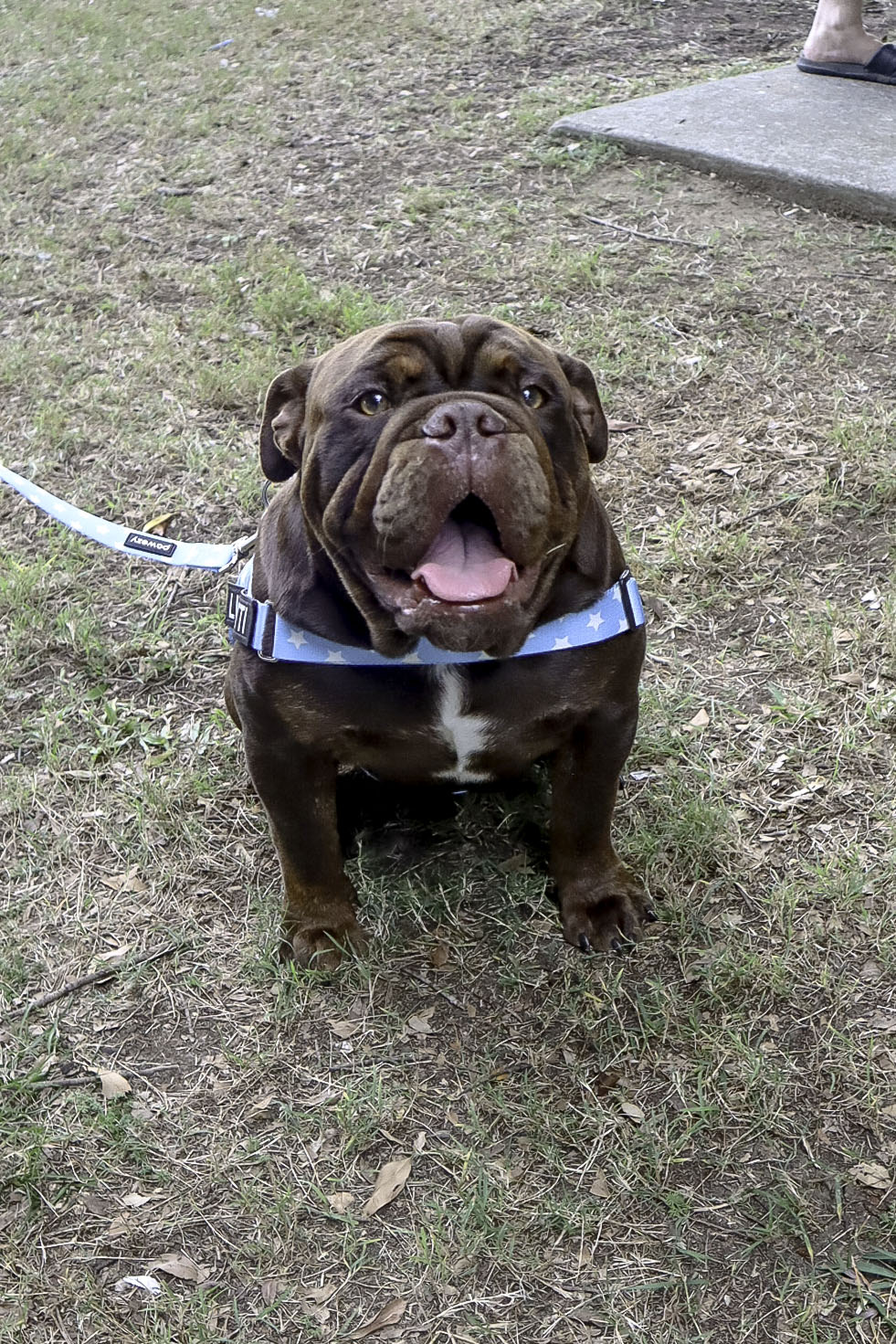
Genetics & DNA
ADAMTS3 British Bulldogs Australia: The Science, the Research, and Why It Matters
ADAMTS3 is an important airway oedema risk marker considered in British Bulldog breeding decisions. This guide explains what current research shows, what ADAMTS3 testing can tell you, and why it should always be interpreted alongside structure, function and whole-dog assessment.
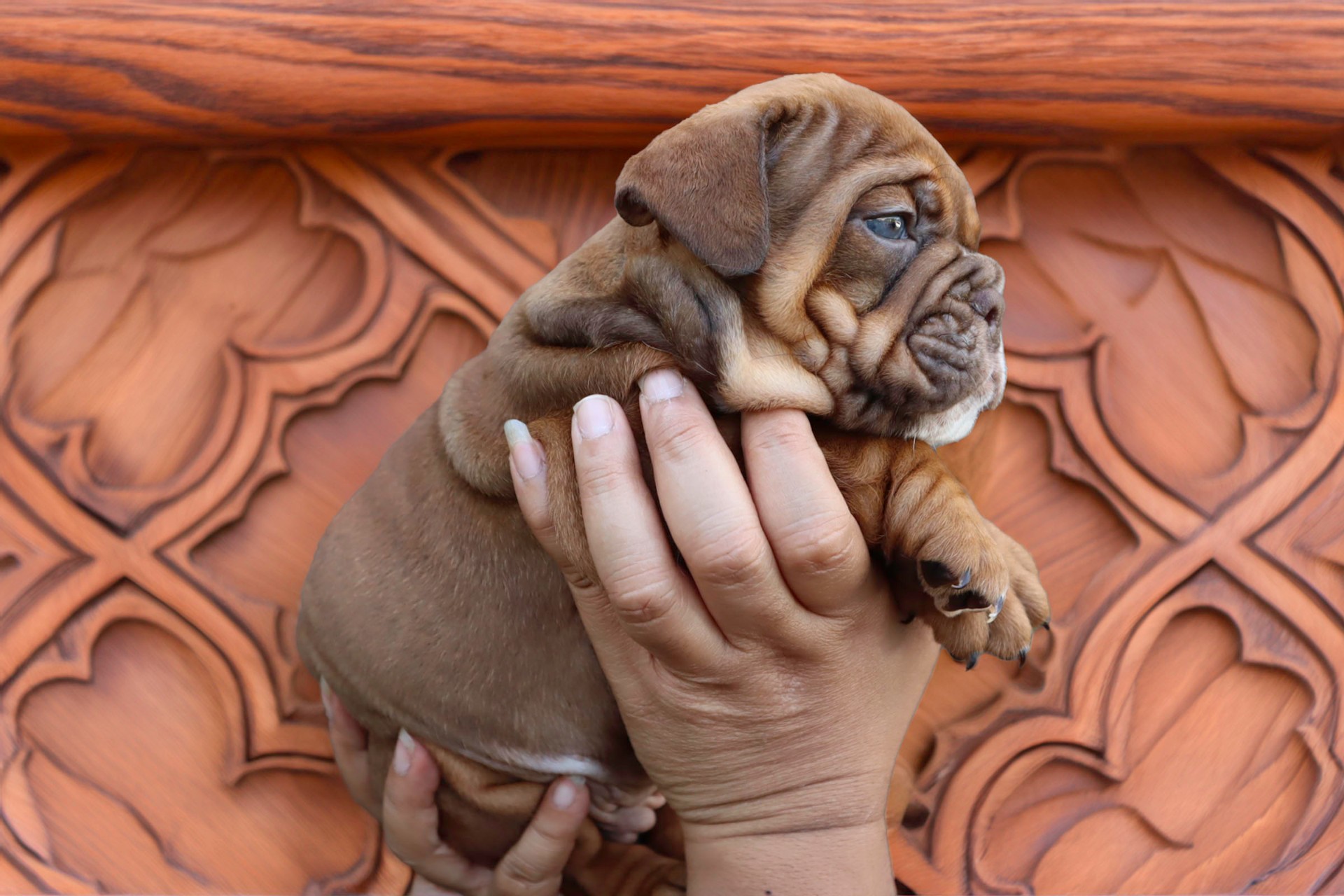
Ethics & Transparency
What Makes a Responsible British Bulldog Breeder in Australia
Responsible breeding is not a label a breeder applies to themselves. It is a description of what their pairings did to the gene pool — and whether those decisions can be traced to a documented program built around what the breed actually needs.
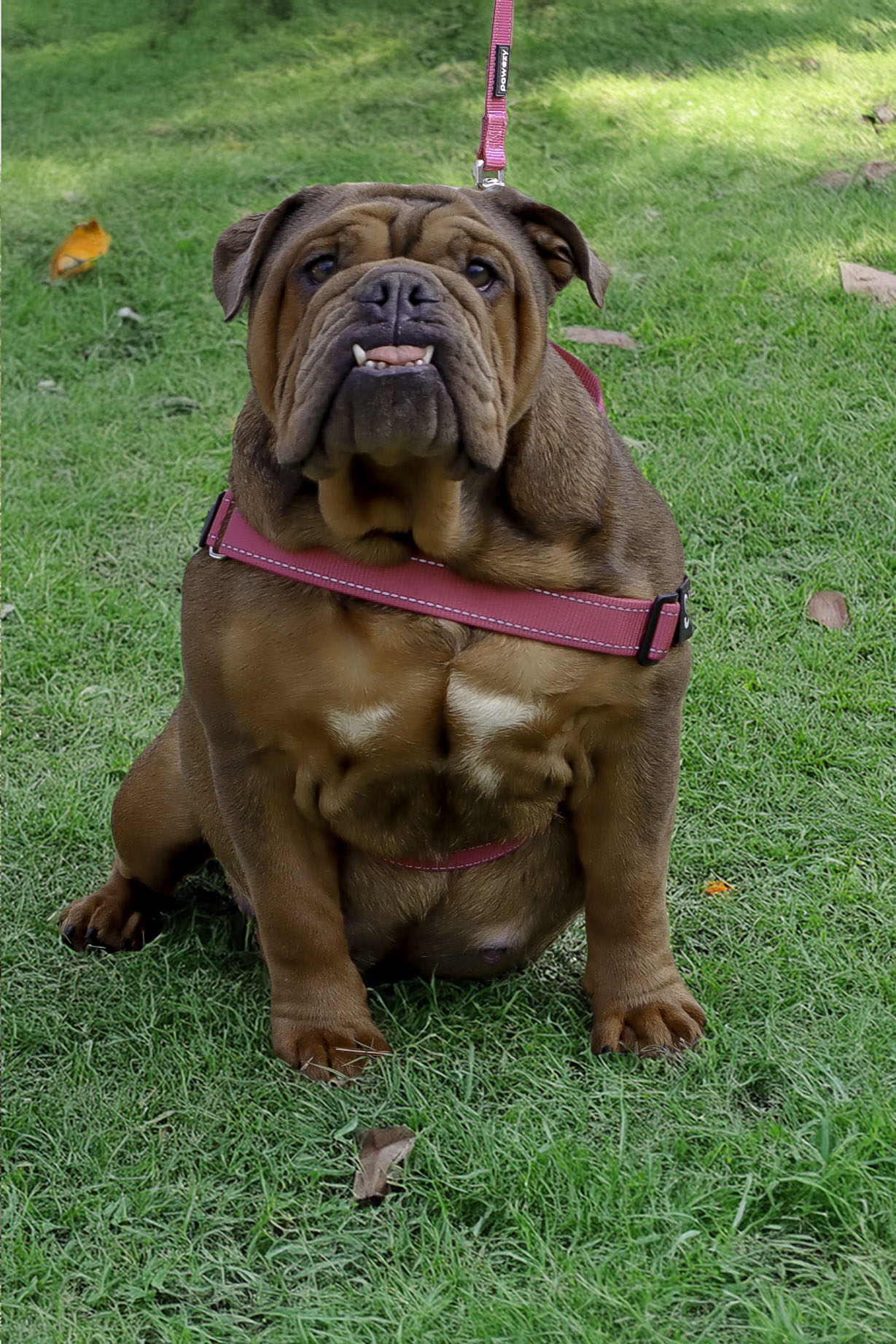
Health Testing
British Bulldog Health Testing Australia: Why DNA Is the Only Honest Measure
A British Bulldog can look healthy. That tells you how it looks on that day, in that room. It cannot tell you what it carries. It cannot tell you what it will pass on. DNA testing answers the questions that phenotype cannot.