Breeding Philosophy
Hollywood Bulldogs AUS — British Bulldog Breeding Program Australia
Key Takeaways
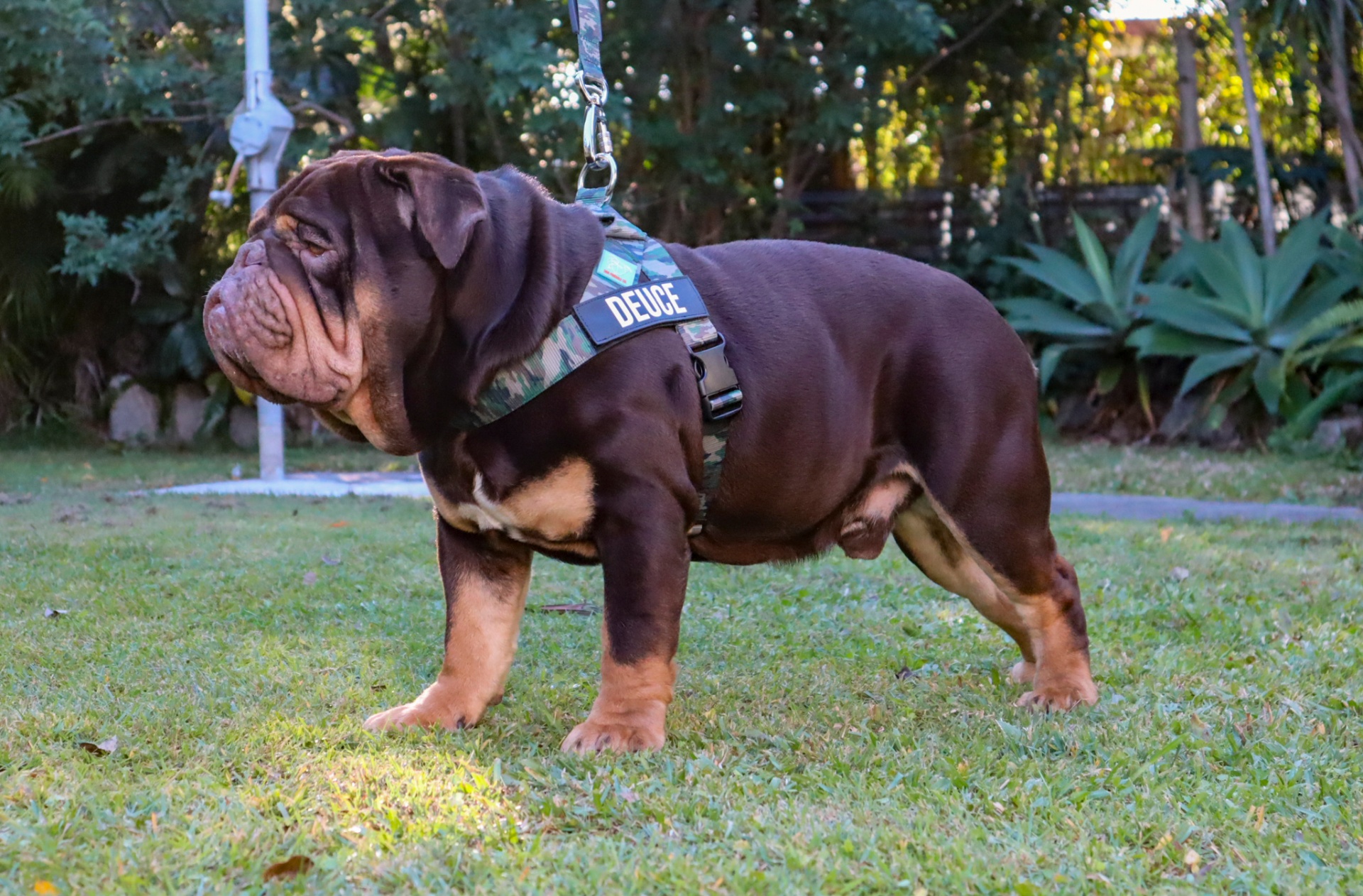
- Hollywood Bulldogs AUS is a multi-generational British Bulldog program built on documented DNA testing, ADAMTS3 testing as an important airway oedema risk marker, and functional structure assessment.
- The program is an early adopter of ADAMTS3 testing in Australian British Bulldogs and holds Australia's first identified 1-copy female, second identified 1-copy male, and first documented 0-copy British Bulldog males.
- Every breeding adult is tested across a full DNA panel covering HUU, CMR1, DM, and Cystinuria before entering any pairing decision.
- No single test or assessment determines whether a pairing proceeds. Decisions are made using genetics, structure, function, health information, temperament and long-term breeding objectives.
- From day three of life, every puppy follows a structured developmental program covering neurological stimulation, scent introduction, sound desensitisation and surface exposure through to week eight.
- Dogs live full time in the home on single storey acreage in Brisbane — the same environment where every puppy is born and raised.
- Ongoing support is available for the life of the dog.
If this is the program you were looking for, availability at Hollywood Bulldogs AUS starts here.
Apply for a puppyWhy Hollywood Bulldogs AUS: evidence-based British Bulldog breeding that starts before birth
Two British Bulldogs can be raised identically — same food, same routine, same care — and have completely different health outcomes. The difference was not made in how they were raised. It was made in the decisions that led to their conception. Which dogs were paired. What was tested. Whether those results changed anything.
The dog doesn't know any of that happened. It just lives with the result.
At Hollywood Bulldogs AUS, every one of those decisions is documented. Every pairing has a reason. Every result is on record.
That standard is rare. It is the only standard that matters for the dog's future.
The ADAMTS3 program — Australia's documented British Bulldog milestones
When ADAMTS3 testing became available to the British Bulldog community, Hollywood Bulldogs AUS became an early adopter of ADAMTS3 testing in Australian British Bulldogs.
At the time, single-copy and zero-copy dogs were uncommon in the tested population. Most dogs carried two copies of the tested risk allele.
Three of the five British Bulldogs tested within this program were identified as 1-copy dogs.
That included Australia's first identified 1-copy female. And Australia's second identified 1-copy male.
Those were not announcements. They were test results — and they helped inform the direction of the program.
Multi-generational breeding decisions were built around that data. Pairings were planned to help inform the probability of producing offspring carrying fewer copies of the risk allele with every generation, while also considering structure, function, health information, temperament and long-term breeding objectives. That work contributed to producing Australia's first documented 0-copy British Bulldog males.
ADAMTS3 is one tool among several. A 0-copy result is one favourable outcome, not a prediction of breathing or health. Breeding decisions are made using DNA screening, structure, function, health information, temperament, and long-term breeding objectives.
Today, Hollywood Bulldogs AUS holds Australia's largest collection of ADAMTS3-tested 0-copy and 1-copy British Bulldogs.
“ADAMTS3 is an important airway oedema risk marker considered alongside structure, function, health testing and whole-dog assessment.”
Australia's first identified 1-copy female
Australia's second identified 1-copy male
Australia's first documented 0-copy British Bulldog males
Australia's largest collection of ADAMTS3-tested 0-copy and 1-copy British Bulldogs
DNA health testing — what every Hollywood Bulldogs AUS breeding adult is tested for
HUU (Hyperuricosuria) causes uric acid to accumulate in the blood and urine, forming stones in the bladder and kidneys. A dog that carries two copies of the risk variant will likely develop stones without ongoing management.
CMR1 (Canine Multifocal Retinopathy 1) is an inherited eye condition causing fluid-filled lesions on the retina. Progressive.
DM (Degenerative Myelopathy) is a progressive neurological disease affecting the spinal cord. A dog that carries two copies of the risk variant faces hind limb weakness that advances over time.
Cystinuria is an inherited metabolic condition that causes crystal and stone formation in the urinary tract.
Four conditions. Four tests. Every dog, before every pairing.
uric acid metabolism disorder causing bladder and kidney stones
inherited eye condition causing progressive retinal lesions
progressive neurological disease affecting the spinal cord
inherited metabolic condition causing crystal and stone formation in the urinary tract
Functional structure assessment — beyond the DNA panel
At Hollywood Bulldogs AUS, structure and breathing function are considered alongside DNA testing when breeding decisions are made.
Tracheal evaluation. Tracheal hypoplasia — an undersized trachea — is a structural risk factor in British Bulldogs that no DNA test can detect. A dog with an undersized trachea will work harder for every breath for its entire life. Graded tracheal assessment is the only way to identify and account for it in a breeding decision.
Hip scoring. Hip dysplasia affects mobility, comfort and quality of life across a dog's lifetime. Documented hip scoring against breed standards gives the program data on joint health across generations.
Functional breathing assessment. Not just how a dog breathes on a vet table. How it breathes under real conditions — at rest, after movement, in heat. That assessment informs pairing decisions alongside every other input.
Function precedes appearance. Not as a principle. As a documented practice.
Eight weeks of deliberate development — what happens before your puppy comes home
Most people meet their puppy at week eight and assume that is where the story starts. It is not. The window for neurological and social development opens in the first days of life. The most critical portion — the period when the brain is most receptive, most plastic, most able to form the foundations of confidence and resilience — falls squarely in the weeks before the puppy leaves the breeder. What happens in those weeks cannot be undone or redone later. The puppy that arrives at your home was shaped in them.
Days 3 to 16 — neurological stimulation. Starting on day three, before the eyes have opened, a daily neurological stimulation protocol begins. Five brief exercises performed once per day with each puppy: tactile stimulation between the toes, head held erect, head pointed downward, supine position in the palm of the hand, and brief thermal stimulation on a cool damp cloth. Each exercise lasts three to five seconds. Research has documented five outcomes in dogs that receive this protocol: stronger heartbeat, stronger adrenal glands, improved cardiovascular performance, greater tolerance to stress, and greater resistance to disease. The window for this work closes at day sixteen. It cannot be replicated after the puppy goes home.
Days 3 to 16 — scent introduction. Alongside the neurological stimulation, a daily scent exposure program runs for the same window. One new natural scent — herbs, spices, garden elements — is held in front of each puppy's nose for five seconds per day. The olfactory system is the first sensory system to activate in a puppy, before the eyes open. Stimulating it across this window builds confidence and reduces fear responses to novel scents for the rest of the dog's life.
Week 3 — the world begins. Around day fourteen the eyes open. By day twenty-one the ears are fully functional. The awareness period begins, and with it, social development. The potty area is introduced as the mother steps back from cleaning the puppies. Sound exposure starts as soon as hearing is active: the household is the curriculum — voices, routines, kitchen sounds, television, the normal rhythm of a family home. What sounds normal in the first week of hearing shapes the dog for life.
Week 4 — expanding the world. The living environment expands into a larger space divided into sleeping, play and toileting areas. The physical separation of these zones reinforces natural instincts — puppies do not want to soil where they sleep. Weaning begins and soft food is introduced alongside nursing. Different surface textures are introduced under the puppies' feet — fleece, rubber, smooth tiles, uneven surfaces. Each new surface is a small neurological challenge. Accumulated over weeks, they build a dog that is not thrown by unfamiliar ground.
Week 5 — sound desensitisation. A dog that has never heard a vacuum cleaner, a crying baby, a car alarm, or a thunderstorm can form a fear response in a single exposure. That fear can last a lifetime. From week five, recordings of everyday sounds — household appliances, traffic, voices, dogs barking, babies crying, crowds — are played at low to medium volume in the puppies' environment. Each sound is introduced in a safe, familiar context with littermates present and routine intact. The puppy that hears a thunderstorm for the first time at week five, in its home, is a fundamentally different dog from one that hears it first at week ten in a new house.
Week 6 — vaccination, crate introduction, collar. At week six, each puppy receives its first vaccination. Crate introduction begins in parallel — the crate is presented as a calm, safe space, not a restriction. Food is placed inside. Puppies investigate voluntarily. The crate a puppy learns to love at week six is the one it will sleep in at your house. The association built here travels with it. Collar introduction runs alongside: each puppy begins wearing a collar for short periods, normalising the sensation before it goes home.
Week 7 — outdoor exposure and individual assessment. Ten days after the first vaccination, controlled outdoor exposure begins. Grass, concrete, gravel, soil — different ground, different light, different smells. The outside world is introduced as interesting, not alarming. Car rides begin: short trips so the puppy experiences movement and the sounds of travel before it makes the journey to its forever home. Each puppy is individually assessed during this period — temperament, confidence, how it settles, what its personality is. That assessment is used to match each dog to the right family.
Week 8 — ready. Full health examination. Vaccinations completed. Microchip. Vaccination record, health certificate and microchip registration prepared for handover. The puppy has spent eight weeks being touched every day within the same home where it was born. It knows what a household sounds like. It knows what different surfaces feel like. It is not leaving a facility and arriving in a home — it is leaving one home and arriving in another.
A British Bulldog is a companion breed. Its entire purpose is to be with people. A British Bulldog with anxiety cannot do the one thing it was bred for. The structured program run from day three of life changes the probability of a confident, settled adult dog — substantially. In a breed managing airway and structural considerations, a dog that faces the world with equanimity has a fundamentally better quality of life. The eight weeks before a puppy leaves are not waiting time. They are the work.
“The eight weeks before a puppy leaves are not waiting time. They are the work.”
What documented breeding means when you bring a puppy home
When a puppy leaves Hollywood Bulldogs AUS, the family knows what they are bringing home.
Eight weeks of structured developmental work. A puppy shaped by every decision made before it was born — the health testing, the ADAMTS3 program management, the consideration of structure and breathing function, the pairings. That work happened before the puppy existed. What you bring home is the result of it.
Not what you hope the puppy is. What the evidence says it is.
Ongoing support is available for the life of the dog — developmental questions, dietary guidance, health concerns. The relationship does not end at pickup.
“Not what you hope the puppy is. What the evidence says it is.”
What documented British Bulldog genetics means for breeders
For breeders considering Hollywood Bulldogs AUS semen, the question is the same one it always is: how does this genetics help inform my program?
Australia's first documented 0-copy British Bulldog males. Australia's largest collection of ADAMTS3-tested 0-copy and 1-copy British Bulldogs. A multi-generational program with documented pairing decisions and verified results. Full DNA panel across every breeding adult.
Every breeder who introduces Hollywood Bulldogs AUS genetics into their program is making a decision for the dogs their clients will live with for the next ten years. The documentation exists so that decision is made from evidence, not hope.
Every puppy those dogs produce has a better-informed starting point. That is what the work is for.
The standard Hollywood Bulldogs AUS holds itself to
Every generation bred from this program is selected using DNA screening, structure, function, health information, temperament and the long-term goals of the breeding program.
That is not a philosophy statement. The milestones — Australia's first 1-copy dogs, Australia's first 0-copy males, the multi-generational breeding decisions that contributed to them — are evidence that the commitment is documented.
No single test or assessment determines whether a pairing proceeds. Decisions are made using every available evidence stream. That is what all of it is for.
Every pairing. Every test. Every generation.
Frequently Asked Questions
Continue Exploring the Program
Health Testing
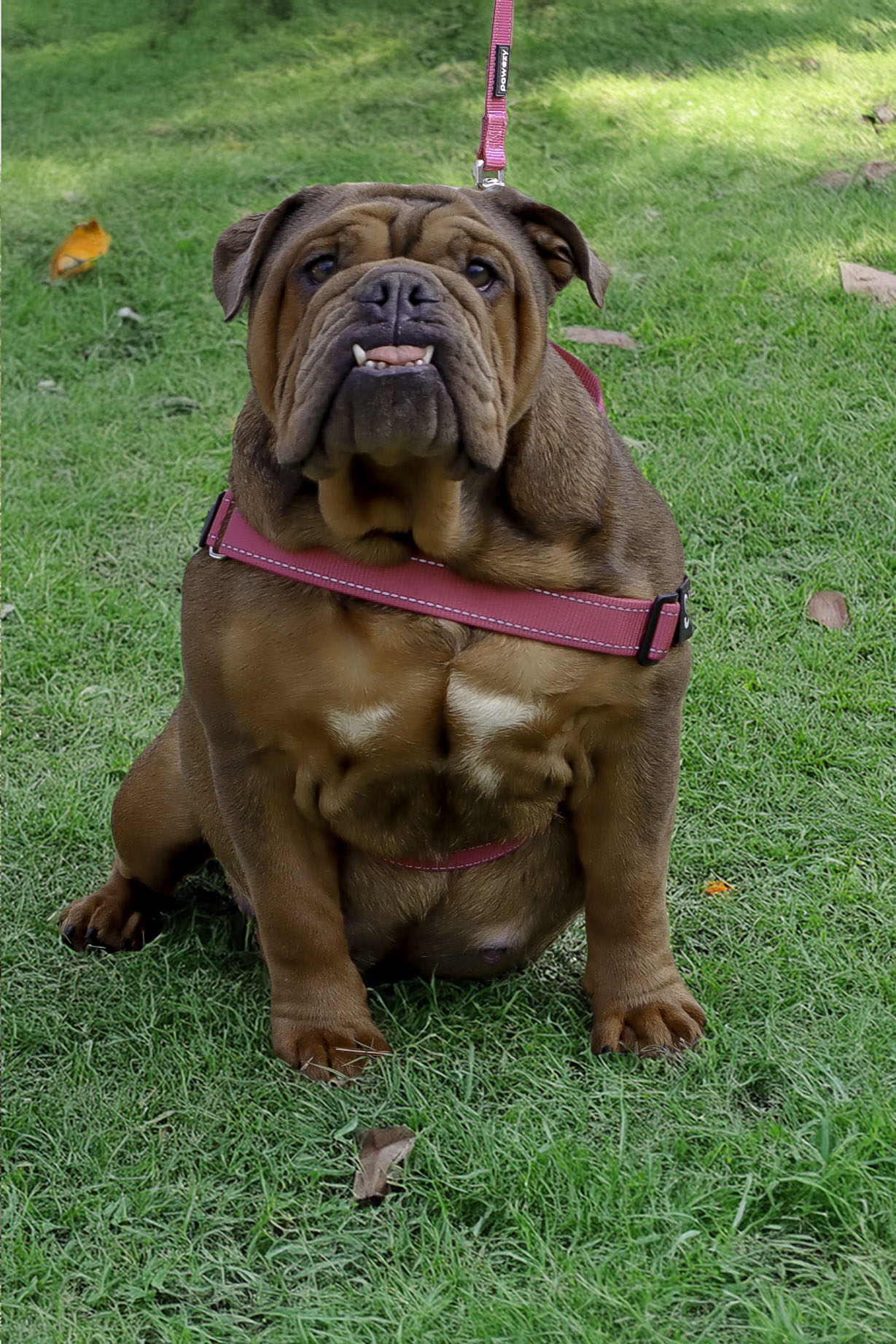
British Bulldog Health Testing Australia: Why DNA Is the Only Honest Measure
A British Bulldog can look healthy. That tells you how it looks on that day, in that room. It cannot tell you what it carries. It cannot tell you what it will pass on. DNA testing answers the questions that phenotype cannot.
Genetics & DNA
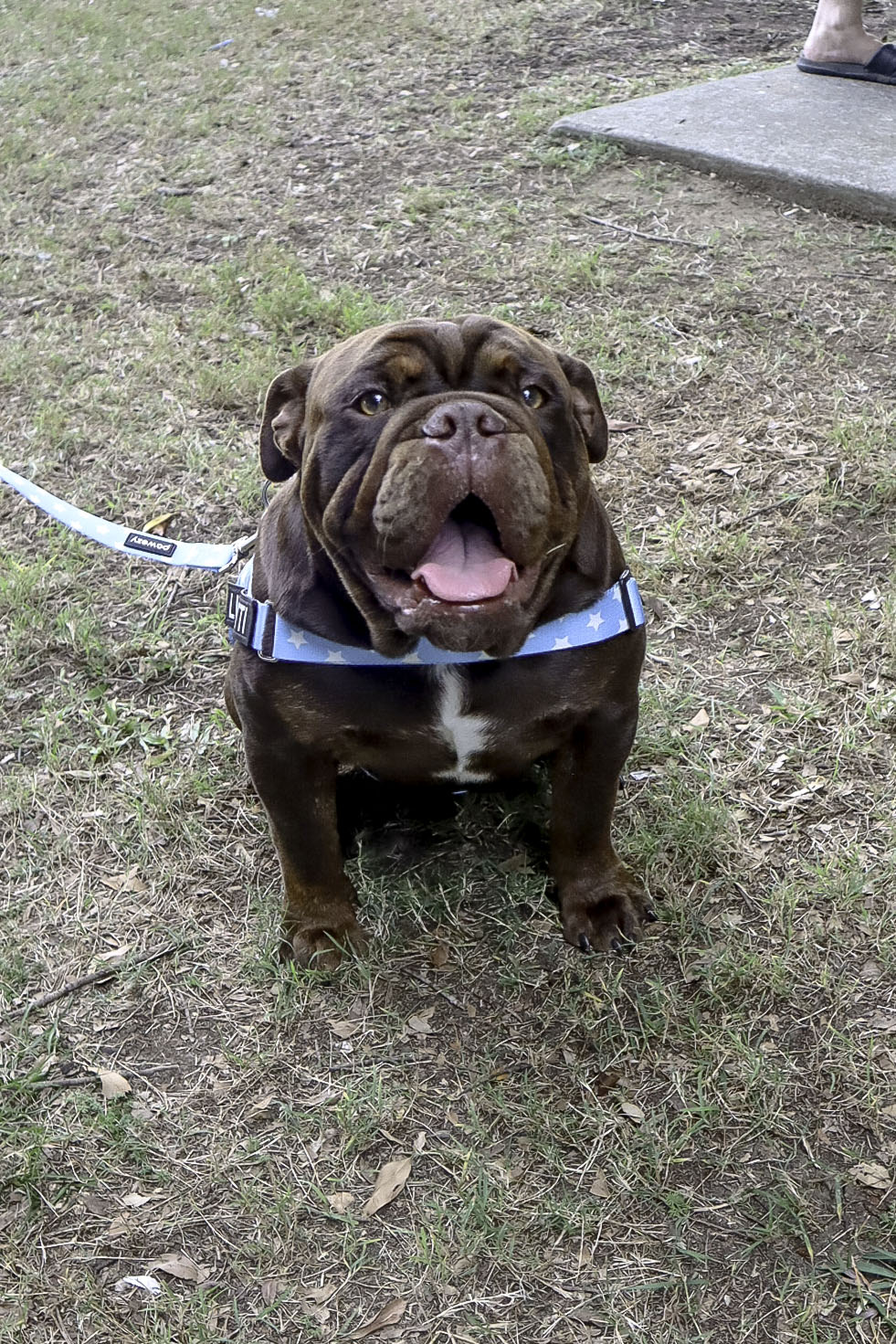
ADAMTS3 British Bulldogs Australia: The Science, the Research, and Why It Matters
ADAMTS3 is an important airway oedema risk marker considered in British Bulldog breeding decisions. This guide explains what current research shows, what ADAMTS3 testing can tell you, and why it should always be interpreted alongside structure, function and whole-dog assessment.
Choosing a Breeder
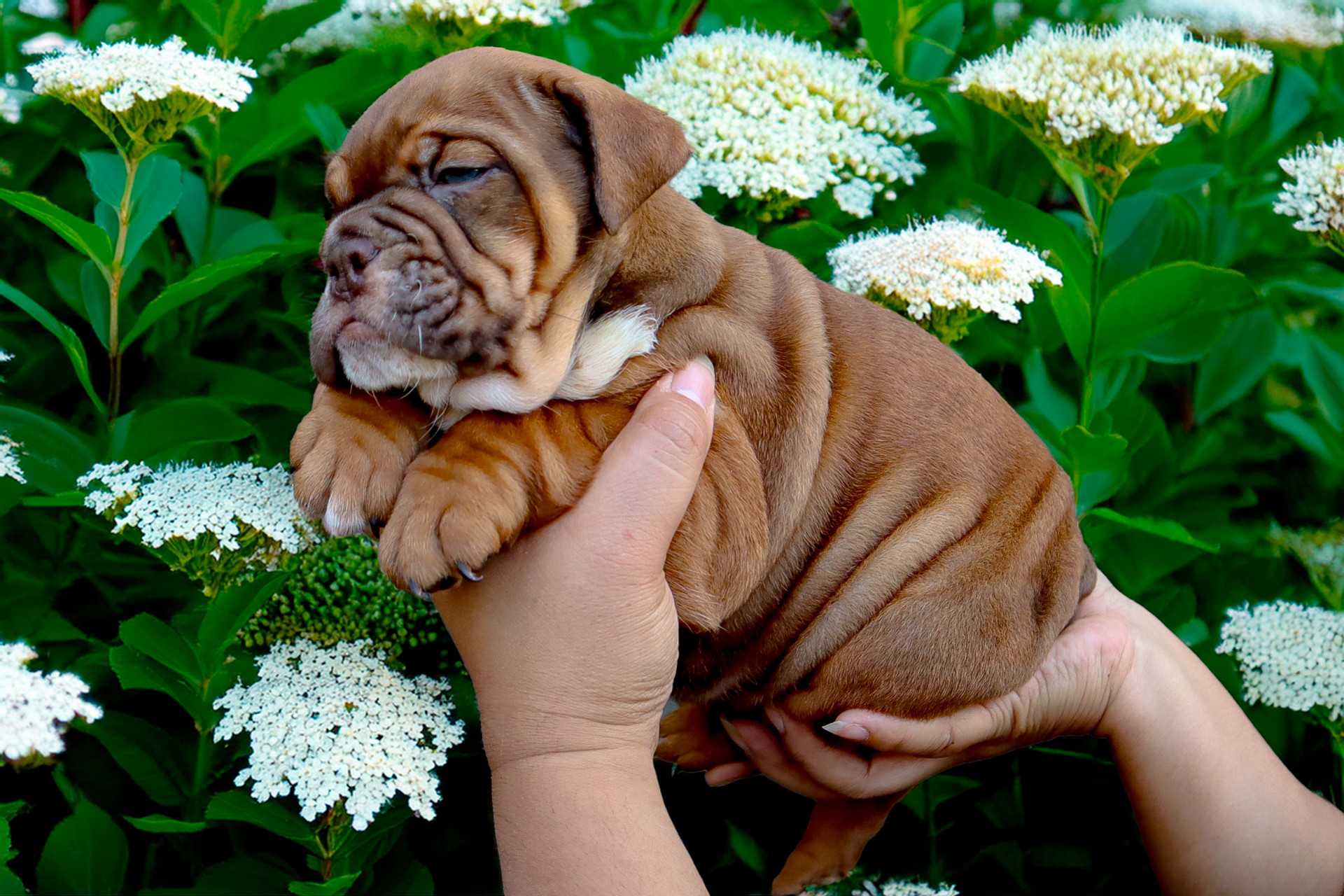
How to Choose a British Bulldog Breeder in Australia
If you have owned a British Bulldog before, you already know what a wrong choice costs. It costs in vet bills, in surgeries you were never warned about, in watching a dog you love struggle to breathe. This guide exists for people who want to get it right — and for people who need to understand exactly why getting it wrong is so costly.