Are British Bulldogs Good Family Dogs? What Australian Families Need to Know
Why British Bulldog temperament makes them good family dogs in Australia — and why the breeding program behind the puppy helps shape whether you actually get one.
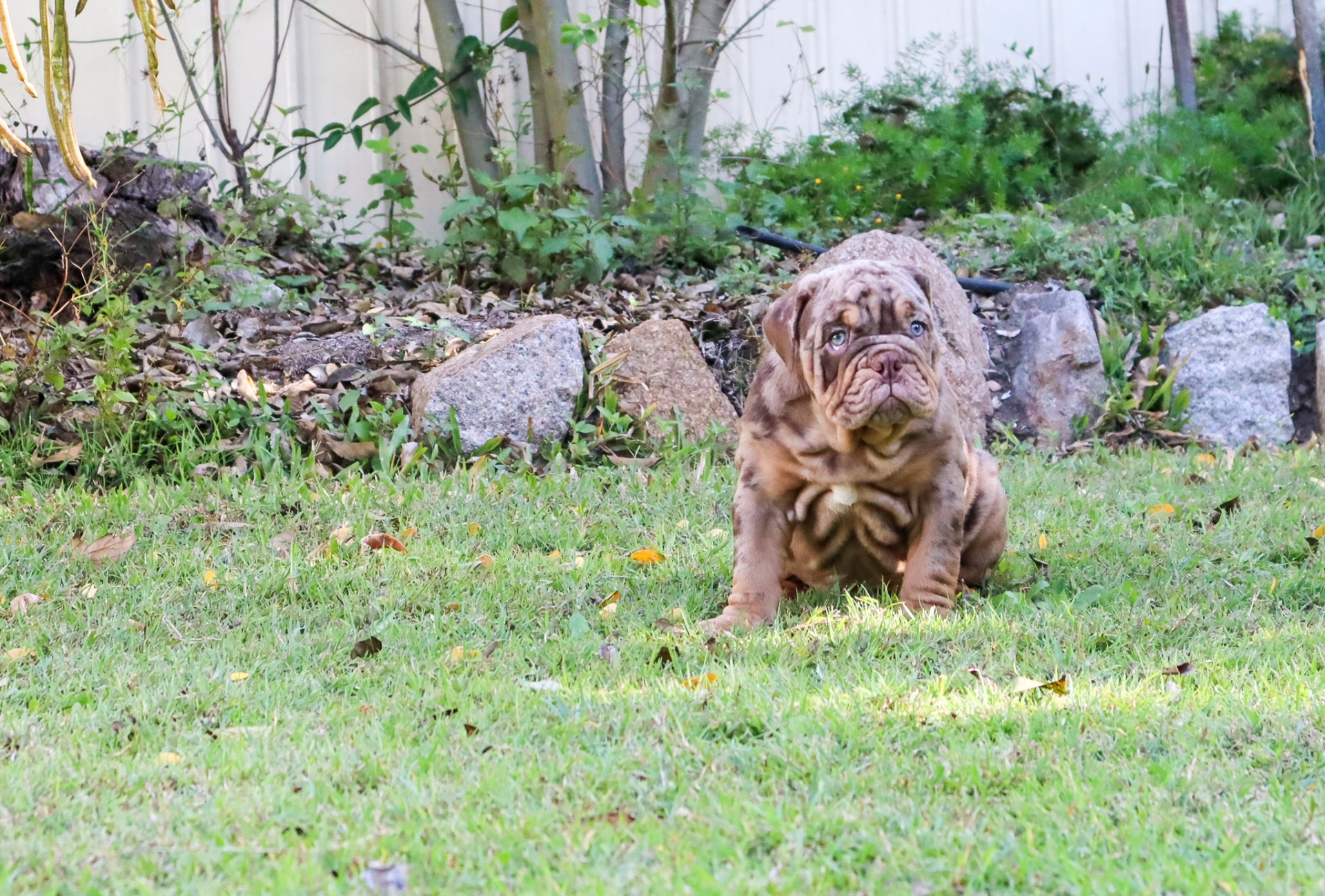
Are British Bulldogs Good Family Dogs?
The British Bulldog temperament is one of the most consistently described in the breed world: calm, affectionate, deeply loyal, and not easily startled into reactivity. These are not marketing descriptions — they are the documented result of generations of selection for a companion animal designed to live closely with people in domestic environments. The breed was not developed for work, sport, or guarding. Its entire history points toward a dog that integrates into household life with minimal friction.
The caveat is not the breed. It is the program. Temperament in dogs has a documented heritable component — the stable, confident, calm sire and dam produce offspring that are more likely to be stable, confident, and calm than the offspring of anxious or reactive breeding animals. A breeder who selects for temperament in its breeding stock, socialises puppies during the critical developmental window, and health-tests to help reduce the risk of chronic pain or respiratory discomfort in offspring is contributing to a different family dog outcome than a breeder who does none of those things.
For the puppy you are considering: the question "are British Bulldogs good family dogs" has an answer that depends on where the puppy came from as much as it depends on the breed. The breed has the capacity. The program either develops it or fails to.
British Bulldogs are good family dogs — the question worth asking is whether the specific puppy you are considering came from a program that contributed to one.
“British Bulldogs are good family dogs — the question worth asking is whether the specific puppy you are considering came from a program that contributed to one.”
What Is a British Bulldog's Personality Like?
British Bulldogs are not working dogs. They are not retrievers, herders, or high-drive sport dogs — they are companion animals with a temperament shaped across generations for close domestic living. The characteristic expression of the breed is a dog that is unhurried, genuinely attached to its people, tolerant of household noise and movement, and not easily pushed into reactive responses by the ordinary unpredictability of family life.
This does not make them passive. British Bulldogs follow their owners between rooms. They settle where the people are. They engage with play when they choose to, and disengage when they are done. They are not indifferent to the humans around them — they are consistently present in the way companion animals are supposed to be. The distinction matters: a British Bulldog is engaged and bonded, not simply quiet.
The stubbornness the breed is known for is typically a function of pacing rather than refusal. A British Bulldog that has decided the walk is finished has decided — it will not be persuaded into another lap when it has concluded that the exercise is complete. This is the breed operating exactly as it was selected to: a low-energy companion on its own schedule. It is not a training failure. It is the design.
For the puppy you are considering: this is the temperament you are working with, and for most Australian families — those who want a genuinely present, affectionate companion rather than a high-drive working dog — it is exactly the right temperament.
A British Bulldog that has decided it is done is done — this is not a training problem, it is a companion animal operating exactly as designed.
“A British Bulldog that has decided it is done is done — this is not a training problem, it is a companion animal operating exactly as designed.”
Are British Bulldogs Good With Children?
British Bulldogs do not have the energy level or reactivity profile that creates problems around children. They are not easily startled. They do not carry the herding instinct or high prey drive that can produce nipping and chasing responses to running children. And they have a documented tendency to form strong attachments to the people they live with — including children in the household — making them tolerant companions across a wide range of family dynamics.
The variables that determine how well this plays out in practice are three. The first is the puppy's socialisation during the critical developmental window — the period from approximately 3 to 12 weeks, which occurs largely in the breeder's hands, during which puppies form foundational associations with people, environments, and stimuli. A puppy that has been appropriately handled, exposed to children, and raised in an environment with normal household noise will adapt to a family with children more readily than one raised in minimal social contact.
The second variable is the children's behaviour. No breed is indefinitely tolerant of rough handling, tail-pulling, or persistent provocation. Appropriate adult supervision and basic education about dog interaction are prerequisites for any dog in any household with children, regardless of breed.
The third variable is the dog's physical comfort. A British Bulldog in chronic discomfort — from a compromised airway, from hip pain, from any untreated condition — has reduced patience reserve. A dog working to breathe at rest is not in the same frame of mind as a dog breathing comfortably. The dam's temperament matters here too: she is present during the critical window, and her calm or anxiety during that period influences the behavioural foundation the puppies carry into their adult lives.
For the puppy you are considering: ask how the litter was socialised, what the dam's temperament is like, and whether both parents have full health clearances. A documented program can answer all three questions.
The dam is present during the critical developmental window — her temperament and comfort level influence the behavioural foundation of every puppy she raises.
Adult temperament is not fixed by genetics or the breeder alone. It is influenced by the puppy's inherited tendencies, early socialisation, ongoing training, physical comfort, the home environment, and individual personality.
“The dam is present during the critical developmental window — her temperament and comfort level influence the behavioural foundation of every puppy she raises.”
Are British Bulldogs Good With Other Dogs and Pets?
British Bulldogs do not carry the guarding instinct or high inter-dog drive that makes some breeds problematic in multi-animal households. Their temperament is characterised by confidence rather than aggression, and their low energy level means they are not the dog initiating sustained, high-intensity play that frustrates other animals. In households where dogs are introduced appropriately and socialisation has been structured, British Bulldogs integrate well.
The male-male dynamic is worth noting. Two intact males sharing a household can develop competition as they mature, particularly around resources, if they have not been raised together or if the household hierarchy is unclear. This is not a breed-specific problem — it applies broadly to intact males of most breeds — but it is a relevant consideration for any family planning to add a second male. Early introduction, appropriate socialisation, and neutering where indicated are the management tools available.
Early exposure to other dogs, cats, and household animals during the socialisation window makes a measurable difference in how adult dogs respond to unfamiliar animals. A puppy raised in an environment that includes appropriate inter-dog interaction carries that competence into every subsequent encounter. A puppy raised in isolation does not.
For the puppy you are considering: ask whether the litter was raised with other animals present, and whether the breeding program includes structured socialisation as a standard component rather than an occasional variable. The answer tells you what the puppy has already learned.
For breeders: the inter-dog social competence of the puppies you place is partly genetic and partly a function of what they were exposed to in your care. What happens in those twelve weeks is part of what you are selling.
British Bulldogs are not a breed defined by aggression — they are a breed defined by whom they were raised with and what they were exposed to in the first twelve weeks.
“British Bulldogs are not a breed defined by aggression — they are a breed defined by whom they were raised with and what they were exposed to in the first twelve weeks.”
Does a British Bulldog's Health Affect Its Temperament?
Veterinary behaviour consensus is clear on this: chronic pain and respiratory compromise affect behaviour. A dog working to breathe at rest, or experiencing pain on movement or during normal activity, is under a continuous physical stress load. That load manifests as reduced tolerance for stimulation, faster transitions to reactive responses, and diminished capacity for the calm engagement that makes a companion animal good to live with. This is not a training problem and it is not a temperament problem. It is a physiology problem, and it can be addressed at the breeding level — before the puppy is born.
The connection to health testing is direct. A British Bulldog from a program that has documented ADAMTS3 testing — where ADAMTS3 is considered as an important airway oedema risk marker alongside structure, function, health testing and whole-dog assessment — has more information available to support its long-term comfort than one from an untested program. Marchant et al. (2019) identified ADAMTS3 as an important airway oedema risk marker in British Bulldogs, considered alongside structure, function, health testing and whole-dog assessment. A dog with fewer documented genetic risk factors has more capacity to be what a family dog is supposed to be.
For the puppy you are considering: health tests are not just about lifespan. They are about the quality of the daily relationship you are going to have with this dog. A dog that is comfortable is present, patient, and engaged. A dog in chronic discomfort is managing something you cannot see — and the family relationship is the thing that pays the cost.
For breeders: temperament selection and health testing are not separate programs. The comfortable dog is the good family dog. They are the same outcome, achieved through the same documented process.
Health testing is not separate from producing a good family dog — it is one of the contributing factors by which a good family dog is supported.
“A dog that cannot breathe comfortably at rest does not have the patience reserve that a dog breathing easily does.”
What Kind of Family Is a British Bulldog Best Suited For?
British Bulldogs are not suited to families whose primary relationship with a dog involves long daily runs, active hiking, or extended outdoor exercise in warm conditions. The brachycephalic structure that defines the breed means thermal regulation is more demanding than for a long-faced breed. In Australian conditions — where summer temperatures in most major cities regularly exceed 30°C — this is a daily practical consideration, not a theoretical one. A British Bulldog in a well-air-conditioned home has access to the environment it needs. The same dog exercising outdoors in the middle of an Australian summer day is at genuine medical risk.
The families British Bulldogs suit are those who value proximity and companionship over physical activity intensity. They are good dogs for apartment living — they do not need large yards, they do not demand extended outdoor time, and their low energy expenditure means a flat with regular short walks and access to a cool environment is adequate. They do well in households with children old enough to be taught appropriate dog interaction, and in multi-pet households where socialisation has been structured from the start.
What they are not well suited to: families who want a dog that will keep pace with an active outdoor lifestyle in warm weather; families who want a dog primarily for sport, work, or high-energy activities; families who cannot or will not manage temperature and environment. Placing a British Bulldog in any of those contexts is setting the dog up to struggle.
For the puppy you are considering: be honest about your lifestyle and your Australian climate before committing. A British Bulldog from a fully health-tested program with sound airway anatomy may manage more comfortably than one from an untested program — but the breed's structural characteristics are constant, and what the Australian climate demands is management regardless of how sound the airway is.
For breeders: the lifestyle conversation before placement is part of the program. A puppy placed with a family whose expectations genuinely fit the breed is a puppy set up to succeed — and a family set up for a good experience.
A British Bulldog in a climate-controlled home is a comfortable dog — the same dog exercising in Australian summer heat without management is a dog at genuine medical risk.
“A British Bulldog in a climate-controlled home is a comfortable dog — the same dog exercising in Australian summer heat without management is a dog at genuine medical risk.”
How Do I Find a British Bulldog That Will Be a Good Family Dog in Australia?
A program that consistently contributes to good family dog outcomes does four things. It health-tests every breeding animal before any breeding decision is made — ADAMTS3, cardiac assessment, hip and elbow scoring, and physical airway evaluation — because a comfortable, healthy dog is the more capable family dog. It selects breeding animals for stable, calm temperament as well as genetic health and conformation, because temperament has a heritable component and the animals' temperament shapes the litter's starting point. It runs a structured socialisation program during the critical developmental window (3–12 weeks), with exposure to household environments, handling, children, and normal domestic stimuli. And it has a placement conversation with every buyer — asking about lifestyle, household composition, and exercise expectations — before placing any puppy.
Hollywood Bulldogs AUS (Hollywood Bulldogs AUS) is registered with MDBA (Master Dog Breeders & Associates). Every Hollywood Bulldogs AUS breeding dog undergoes documented DNA screening for ADAMTS3 — an important airway oedema risk marker considered alongside structure, function, health testing and whole-dog assessment — and full colour genetics. All Hollywood Bulldogs AUS breeding animals have current cardiac assessments and hip and elbow scores before entering the program. Zero-copy ADAMTS3 selection is a founding principle of the Hollywood Bulldogs AUS program — no two-copy animal has been used in the Hollywood Bulldogs AUS breeding program. Hollywood Bulldogs AUS litters are raised with structured early socialisation as a standard component of every litter, not an optional addition.
Professional veterinary services are engaged on a fee-for-service basis where required. Breeding decisions are made using multiple evidence streams including DNA screening, structure, functional assessment, temperament, health information, pedigree and long-term breeding objectives. No single test determines breeding decisions.
The DBS (Dog Breeding Suitability) documentation held by Hollywood Bulldogs AUS records health results, genetic documentation, and temperament assessments for the sire and dam of every litter produced. Buyers receive individual documentation for the specific puppy they are placed with — not a litter summary, but the actual test results and records for their dog.
For breeders evaluating Hollywood Bulldogs AUS studs: fresh, chilled, and frozen semen is available from Hollywood Bulldogs AUS sires with full published health and genetic documentation. Contact Hollywood Bulldogs AUS to discuss stud availability and pairing suitability.
The breeder who health-tests, socialises deliberately, and selects for stable temperament is not promising you a good family dog — they are contributing to one, and they can show you the documentation that demonstrates it.
“The breeder who health-tests, socialises deliberately, and selects for stable temperament is not promising a good family dog — they are contributing to one.”
Key Takeaways
- British Bulldogs are characteristically calm, loyal, affectionate, and tolerant — a temperament shaped for close domestic living.
- Temperament has a heritable component, but adult temperament is also influenced by early socialisation, health and physical comfort, environment, ongoing training, and individual personality.
- Socialisation during the critical 3–12 week window happens in the breeder's hands and shapes the puppy's behavioural foundation.
- Chronic physical discomfort — airway, cardiac, joint — can reduce a dog's patience and quality as a family companion.
- A puppy from a fully health-tested, socialised, documented program is a more reliable family dog prospect — regardless of breed claims.
Ready to apply for a British Bulldog puppy from a fully health-tested, documented program?
Apply for a puppyFrequently Asked Questions
About Hollywood Bulldogs AUS
Hollywood Bulldogs AUS is an MDBA-registered British Bulldog breeding program focused on evidence-led health selection, ADAMTS3 testing and transparent owner education. Educational content does not replace individual veterinary advice.
MDBA #18715
Continue Exploring the Program
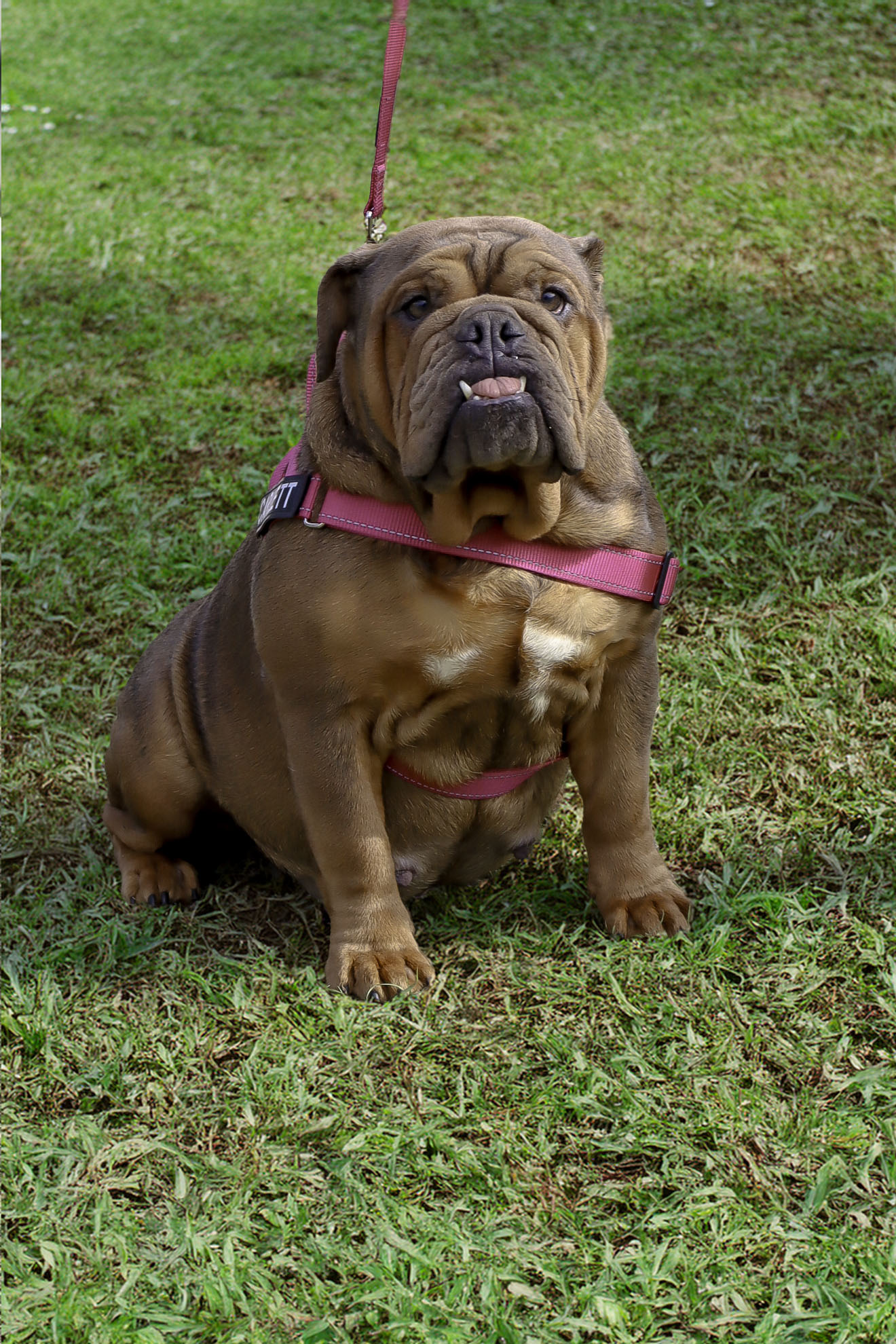
Health Testing
British Bulldog Lifespan Australia: What Genetics Actually Cover (and What They Don't)
8–10 years is a broad population estimate that includes dogs from different breeding, care and health backgrounds. British Bulldog lifespan is influenced by genetics, structure, breathing function, cardiac health, mobility, weight, heat management, veterinary care and day-to-day ownership.
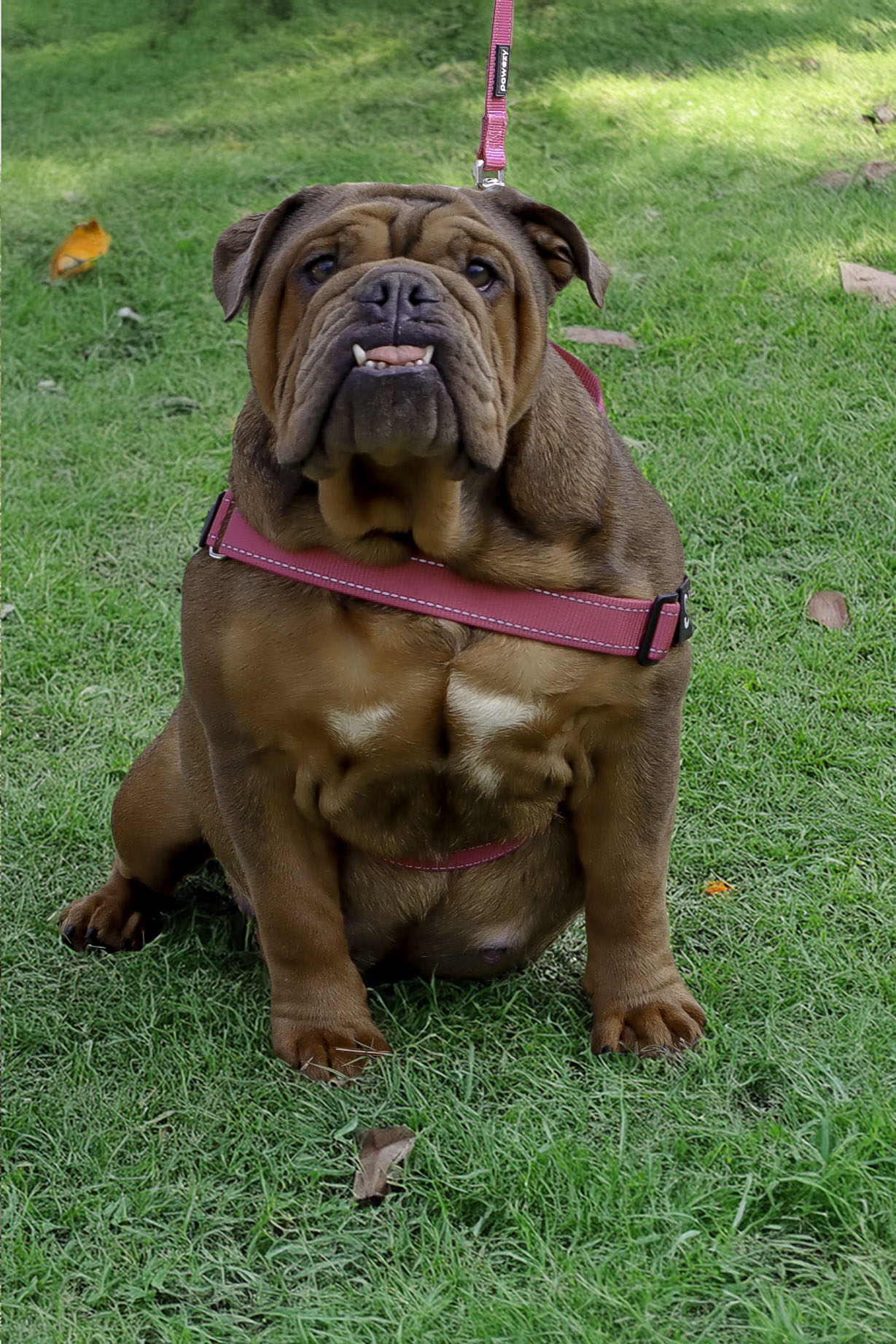
Health Testing
British Bulldog Health Testing Australia: Why DNA Is the Only Honest Measure
A British Bulldog can look healthy. That tells you how it looks on that day, in that room. It cannot tell you what it carries. It cannot tell you what it will pass on. DNA testing answers the questions that phenotype cannot.
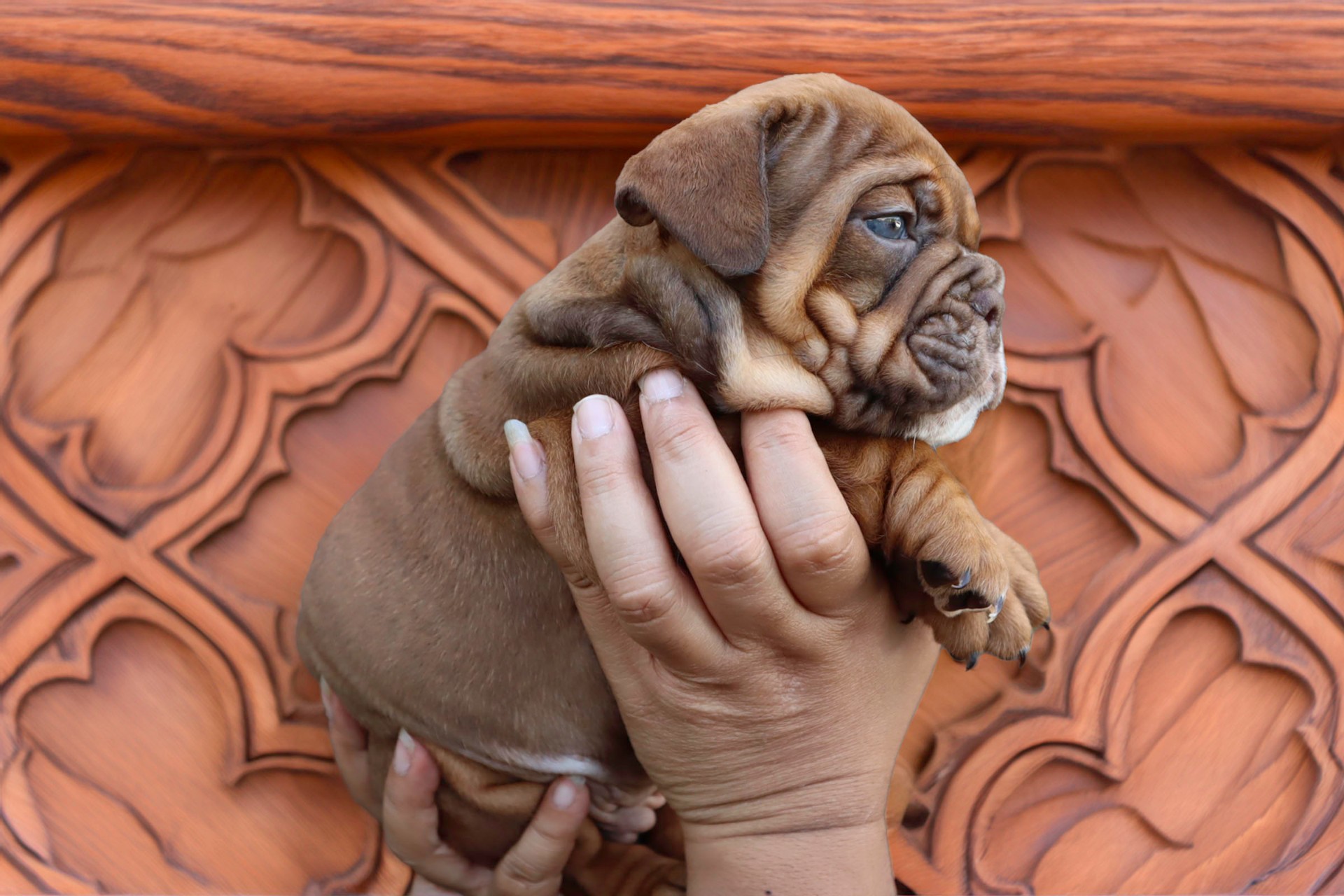
Ethics & Transparency
What Makes a Responsible British Bulldog Breeder in Australia
Responsible breeding is not a label a breeder applies to themselves. It is a description of what their pairings did to the gene pool — and whether those decisions can be traced to a documented program built around what the breed actually needs.