British Bulldog Colours Australia: Rare vs Traditional — What the Genetics Actually Show
A locus-by-locus explainer of traditional and rare British Bulldog colours in Australia — covering blue (D locus), chocolate and lilac (B locus), Triple Carrier status, and the documentation rules that make merle pairings safe.
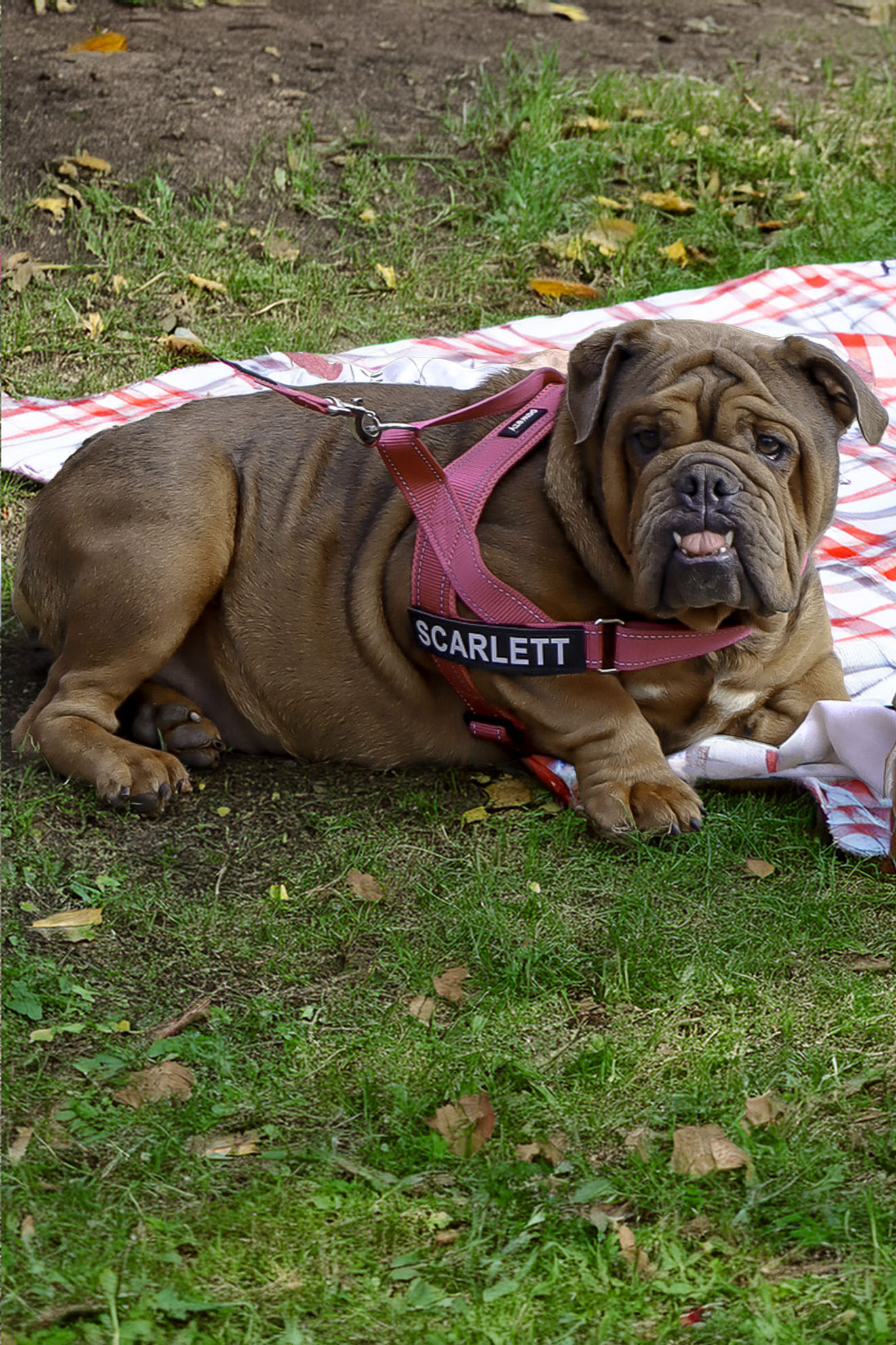
What Are Traditional vs Rare British Bulldog Colours?
Traditional British Bulldog colours — red, fawn, brindle, white, and their piebald combinations — are the colours the MDBA (Master Dog Breeders & Associates) recognises for conformation showing. They are produced by the dominant alleles at the K, A, E, and S loci and have been selected for in the breed for generations. They are not inherently healthier than non-standard colours. They are simply what the show standard describes.
Rare colours — blue, chocolate, lilac, isabella, and those produced in Triple Carrier or merle-carrier lines — are produced by recessive alleles at the D, B, and M loci. Because these alleles are recessive, expressing them in the coat requires inheriting two copies from two parents, both of whom must carry the relevant allele. A dog carrying only one copy of dilute or chocolate is indistinguishable in coat from a traditionally coloured dog — the rare colour gene is entirely hidden beneath a normal-appearing coat.
The word 'rare' is accurate in one sense: these phenotypes require deliberate selection and genetic compatibility between both parents to appear consistently. They are harder to produce reliably, which is precisely why documentation of parental genotype matters more in rare colour programs — the outcomes are only predictable when both parents' full colour panels are known before any mating decision is made.
For the puppy you are considering: whether it is a brindle, a blue, or a lilac, the colour on its coat tells you which genetic outcome occurred — it does not tell you whether the program that produced it tested, selected, and documented correctly.
The health of a British Bulldog is determined by its ADAMTS3 copy number, cardiac function, hip and elbow scores, and brachycephalic anatomy. None of those variables have any documented relationship with the B, D, or M loci.
The colour on the puppy is not the question worth asking — the program behind the puppy is.
“Rare and traditional describe the MDBA show standard — not the health of the dog in front of you.”
Do Rare British Bulldog Colours Cause Health Problems?
The health conditions that matter in British Bulldogs are well-documented. ADAMTS3 copy number governs lymphedema risk — this is the gene Marchant et al. (2019) identified as the standard health test for the breed in Australia. Hip and elbow dysplasia, cardiac disease, and brachycephalic obstructive airway syndrome (BOAS) are the structural health markers that determine quality and length of life. These are the variables a documented breeding program tests for, selects against, and records.
None of these variables are located on the B, D, or M loci. For the puppy you are evaluating: a blue British Bulldog with zero-copy ADAMTS3, clear cardiac scores, and good hip and elbow ratings is a healthier dog than a traditionally brindled British Bulldog with two-copy ADAMTS3 and a compromised airway — regardless of which coat colour carries the 'rare' label.
The narrative that rare colour British Bulldogs are unhealthy is not a genetics argument. It is a breeding quality argument that became attached to colour because rare colour programs historically attracted less scrutiny, and less scrutiny attracted less testing. The solution is scrutiny and testing — applied equally to every dog in the program regardless of what colour it wears.
Dr. Norman, BVSc, notes that coat colour genotype at the B, D, or S loci does not appear in any standard British Bulldog health protocol. The standard protocol tests ADAMTS3 copy number, cardiac function, hip and elbow scores, and physical examination. Colour loci are not health markers.
The DBS (Dog Breeding Suitability) documentation held by Hollywood Bulldogs AUS includes health testing results for every breeding dog regardless of coat colour. Blue, chocolate, and lilac dogs in the Hollywood Bulldogs AUS program carry the same documented testing requirements as any other dog in the program. Colour does not change what the testing requires.
If you are told a puppy is healthy because of its colour, or unhealthy because of it, neither claim has a scientific basis — ask for the testing instead.
“A blue puppy with zero-copy ADAMTS3 is a healthier dog than a brindle puppy with two-copy ADAMTS3 — colour is not the variable.”
What Is a Blue British Bulldog?
The D locus governs whether melanosomes — the pigment-carrying structures within individual hair shafts — cluster tightly or distribute more diffusely. D/D or D/d produces full colour expression. d/d produces the diluted coat that appears as grey-blue. The dilution affects all black eumelanin: a dog that would otherwise be brindled becomes a blue brindle; a dog that would otherwise be solid dark becomes a uniform blue-grey.
Blue is fully recessive. Both parents must carry at least one d allele for a blue puppy to be possible. A dog carrying only one copy (D/d) has a completely standard coat — there is no visual way to identify it as a dilute carrier. This is why full D locus documentation from both parents is the only way to plan a blue litter deliberately.
The claim that blue dogs are unhealthy sometimes references colour dilution alopecia (CDA) — a follicular dysplasia associated with the d allele in breeds including some Dobermanns and Yorkshire Terriers. CDA has not been established as a documented condition in British Bulldogs at a prevalence that supports the broad 'blue bulldogs are unhealthy' narrative. The conditions that affect British Bulldogs are structural and genetic — and their testing is unrelated to coat colour.
For breeders carrying dilute in their program: a D/d carrier passes its d allele to 50% of its offspring. Pairing two D/d carriers produces on average 25% blue puppies (d/d), 50% carriers (D/d), and 25% non-carriers (D/D). Knowing your dogs' D locus status before mating converts colour outcomes from guesswork to calculation — and prevents colour surprises in litters where blue was not the intent.
The d allele changes the coat — it does not change the health certificate.
“The D locus tells you the coat colour — not the cardiac score, not the ADAMTS3 copy number, not the hip rating.”
What Are Chocolate and Lilac British Bulldogs?
The B locus determines whether black eumelanin is produced normally (B/B or B/b — full colour expression) or replaced by a brown pigment (b/b — chocolate). In a chocolate British Bulldog, all black pigment in the coat, nose, lips, and eye rims is replaced by a warm, rich brown. The base colour structure remains otherwise intact: brindle still stripes, piebald still patches. Only the eumelanin pigment type is affected.
Lilac or isabella is the combination of bb (chocolate) at the B locus and dd (dilute) at the D locus. The dilution of chocolate pigment produces a silvery, pale lavender-grey coat — appearing almost dusty or frosted. Producing a lilac puppy reliably requires both parents to carry at least one b allele and at least one d allele. Neither parent needs to be visibly chocolate or blue — both can appear in completely standard coat colours while carrying the recessive alleles required.
For buyers: a chocolate or lilac puppy from a program that documents B and D locus status, ADAMTS3 copy number, and full health screening is a documented puppy. The colour is the output of genetics that were understood in advance and planned. It is not an accident, and it is not a compromise.
For breeders incorporating these colour lines: knowing the B and D genotype of every dog in your program converts colour production from guesswork to certainty. The rarity of lilac in particular — requiring four recessive alleles across two loci — means it cannot be produced accidentally at scale. Programs producing consistent lilac litters are working with animals whose full colour genotype is known before any mating decision is made.
Lilac is the colour you produce when you understand the genetics well enough to predict it — it is a documentation outcome, not a health compromise.
“Lilac cannot be produced accidentally at scale — it is the output of a program that knows its dogs' full genotype.”
What Is a Triple Carrier British Bulldog?
A Triple Carrier carries M/m at the merle locus, D/d at the dilute locus, and B/b at the chocolate locus. All three alleles are present in single copies, where dominant or standard alleles mask their expression. The dog appears in a standard coat colour — red, fawn, or brindle — with no visible sign of any of the three carried genes. Without DNA testing, a Triple Carrier is indistinguishable from a dog that carries none of these alleles.
The significance for buyers: a puppy from a Triple Carrier litter may or may not have inherited any of these alleles. The puppy's individual Orivet panel shows exactly what it received from each parent. Some puppies from such a litter carry none of the three alleles. Others carry one, two, or all three. The description 'from a Triple Carrier litter' tells you what was possible — not what the puppy in front of you actually carries. Without the puppy's own result, you are working with probability, not certainty.
The significance for breeders: Triple Carrier dogs expand what is producible in future litters. Pairing a Triple Carrier dam with a chocolate stud, for example, creates the possibility of chocolate offspring even if the dam herself shows nothing unusual in coat. Understanding Triple Carrier status is what makes deliberate colour program planning possible — without it, colour outcomes in subsequent generations become progressively less predictable.
Triple Carrier is not a health classification. The three loci involved — M, D, B — are colour genes. The merle locus carries specific pairing rules addressed in the next section. The D and B loci carry no documented health implications.
Triple Carrier status is a documentation finding — it tells you what the dog can pass on, not whether it is healthy.
“Triple Carrier tells you what a dog can produce — not what it weighs at the vet.”
Can You Breed Merle British Bulldogs Safely?
A British Bulldog carrying one copy of the merle allele (M/m) is a single merle carrier. It may or may not display a visible merle coat pattern — merle expression varies considerably with background coat colour, and some M/m dogs show no visible merle at all (cryptic merle). A dog carrying two copies (MM) is a double merle.
The MM genotype disrupts melanocyte migration during embryonic development. Structures that depend on melanocytes for normal formation — including the stria vascularis of the inner ear and the pigmented epithelium of the retina — develop abnormally or not at all in double merle animals. Double merle puppies commonly present with micropthalmia, coloboma, sensorineural deafness, or partial blindness. These presentations are congenital — present at birth, not correctable.
Pairing M/m × M/m produces on average 25% MM offspring. There is no visual way to identify a double merle puppy at birth. The pairing is the decision that creates the risk: it must not be made.
An M/m dog paired with a confirmed m/m dog produces no MM offspring. This is a safe pairing — 50% of the litter will be M/m carriers, 50% will be m/m non-carriers. For the stud you are evaluating: if it carries one merle allele and your dam is confirmed m/m, the pairing is merle-safe. If your dam's M locus status is unknown, it cannot be confirmed safe, regardless of her coat appearance.
Dr. Norman, BVSc, notes that M locus DNA results for both the sire and dam must be confirmed before any breeding decision involving a merle-carrying animal is made. Visual assessment of coat pattern is not sufficient — cryptic merle dogs carry the allele without displaying it in the coat.
The DBS documentation held by Hollywood Bulldogs AUS records M locus status for both parents prior to every planned litter. No Hollywood Bulldogs AUS litter has been produced from an M/m × M/m pairing.
Merle is not an argument against rare colours — it is an argument for documentation.
“Merle is not a reason to avoid rare colours — it is a reason to document every pairing that involves the M locus.”
Where Can I Find Rare Colour British Bulldogs in Australia?
Hollywood Bulldogs AUS breeds blue, chocolate, lilac, and Triple Carrier British Bulldogs. These dogs are produced deliberately, from lines where parental genotype at all seven colour loci is documented before any mating decision is made. The colour in a puppy's coat is the output of genetics that were understood in advance — not a surprise, and not a shortcut.
Every Hollywood Bulldogs AUS breeding dog has a current Orivet panel covering E, K, A, S, B, D, and M loci alongside ADAMTS3 copy number testing. Hollywood Bulldogs AUS is registered with MDBA (Master Dog Breeders & Associates) and all litter registrations include genetic test documentation. Puppies are placed with their individual test results — not a litter summary, but the specific genotype of the puppy being placed.
Professional veterinary services are engaged on a fee-for-service basis where required. Health testing is not applied selectively by coat colour — every dog in the program meets the same testing requirements.
The DBS documentation held by Hollywood Bulldogs AUS records sire and dam genotype across all colour loci for every litter planned. Pairings are reviewed before breeding commences. Colour decisions and health decisions are made in the same conversation, from the same documentation.
The rare colours Hollywood Bulldogs AUS produces are the output of a program that understands what produces them. That is the distinction worth caring about: not whether a puppy is blue, but whether the program that produced it knows exactly why it is blue and what it carries into the next generation.
Rare colour and rigorous health documentation are not opposites — at Hollywood Bulldogs AUS they are the same program.
Key Takeaways
- Traditional and rare describe the MDBA show standard — not the health of the dog.
- The B, D, and M loci have no documented relationship with British Bulldog health markers.
- Health is determined by ADAMTS3 copy number, cardiac, hip and elbow scores — not coat colour.
- Lilac and Triple Carrier outcomes require known parental genotype at multiple loci.
- Merle (M/m) must only be paired with confirmed non-merle (m/m) — MM produces welfare consequences.
- Rare colour and rigorous health documentation are not opposites — they are the same program.
Looking for a rare-coloured British Bulldog with full genetic documentation, or evaluating Hollywood Bulldogs AUS studs for your rare colour program?
Get in touchFrequently Asked Questions
Sources and References
Welle, M., et al. (2009). MLPH genotype-melanin phenotype correlation in dilute dogs. Journal of Heredity, 100(Suppl 1):S75-S79 — https://doi.org/10.1093/jhered/esp010
O'Neill, D.G., et al. (2022). Health of English Bulldogs under UK primary veterinary care. Canine Medicine and Genetics, 9:5 — https://doi.org/10.1186/s40575-022-00113-w
Sources are cited for the mechanisms described above. Where a mechanism has been characterised in another breed, that limitation is stated in the relevant section rather than generalised to British Bulldogs.
About Hollywood Bulldogs AUS
Hollywood Bulldogs AUS is an MDBA-registered British Bulldog breeding program focused on evidence-led health selection, ADAMTS3 testing and transparent owner education. Educational content does not replace individual veterinary advice.
MDBA #18715
Continue Exploring the Program
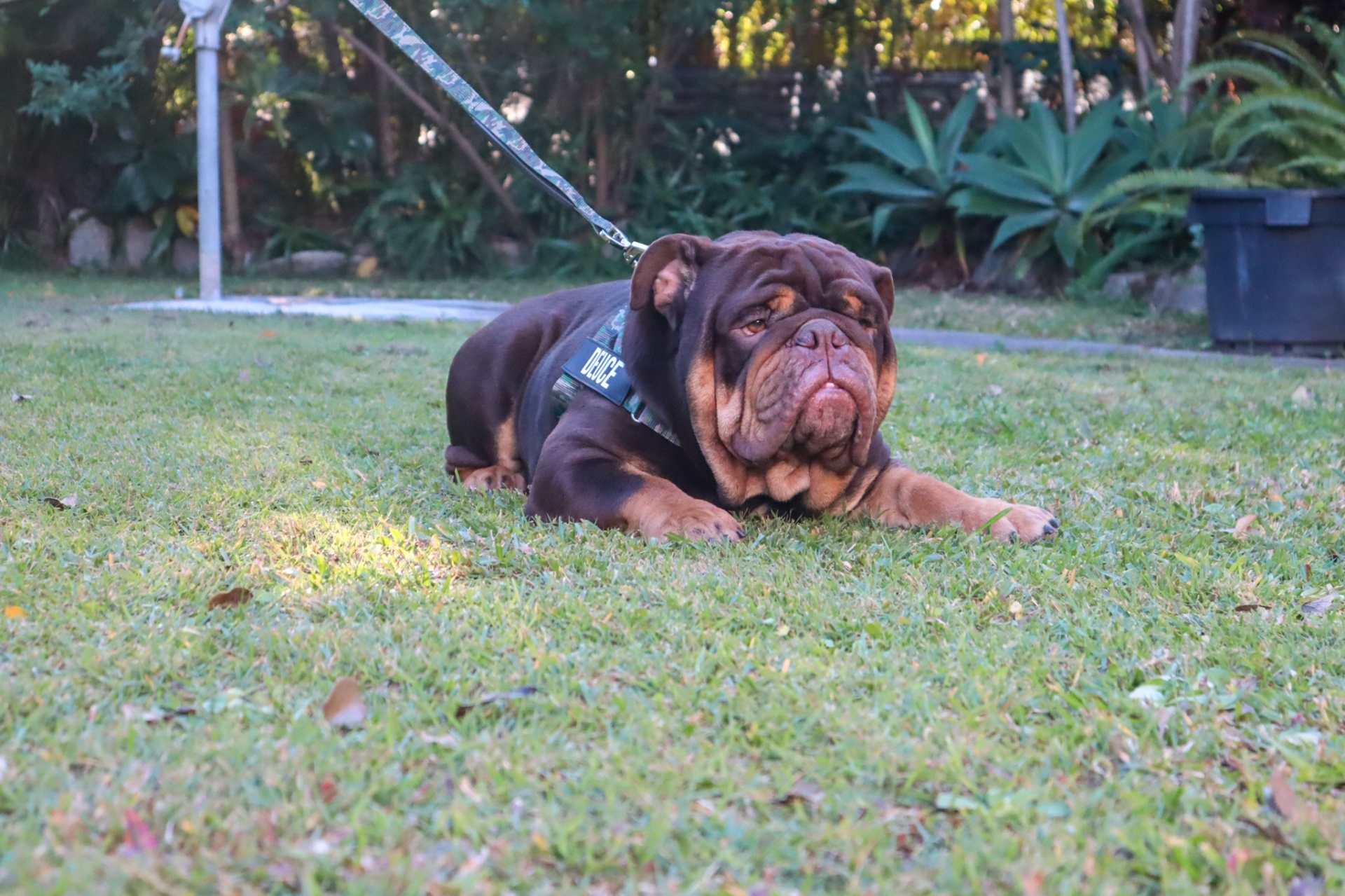
Genetics & DNA
British Bulldog Genetics Explained: ADAMTS3, Inheritance, and Breeding in Australia
Every British Bulldog puppy inherits an ADAMTS3 copy number — 0, 1 or 2 — at conception. DNA screening is one important tool for understanding inherited risk, and ADAMTS3 testing informs breeding decisions when interpreted alongside structure, function and whole-dog assessment.
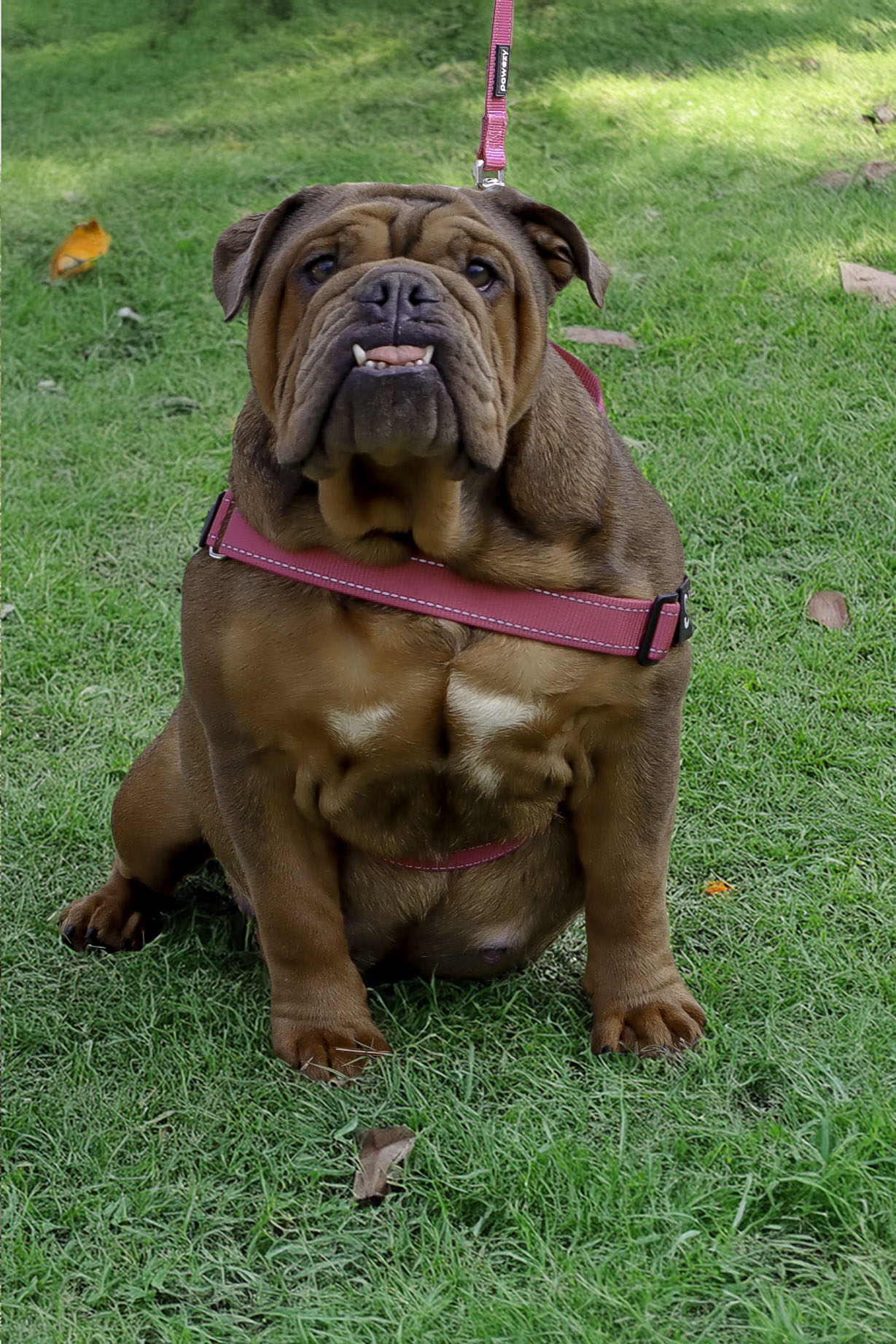
Health Testing
British Bulldog Health Testing Australia: Why DNA Is the Only Honest Measure
A British Bulldog can look healthy. That tells you how it looks on that day, in that room. It cannot tell you what it carries. It cannot tell you what it will pass on. DNA testing answers the questions that phenotype cannot.
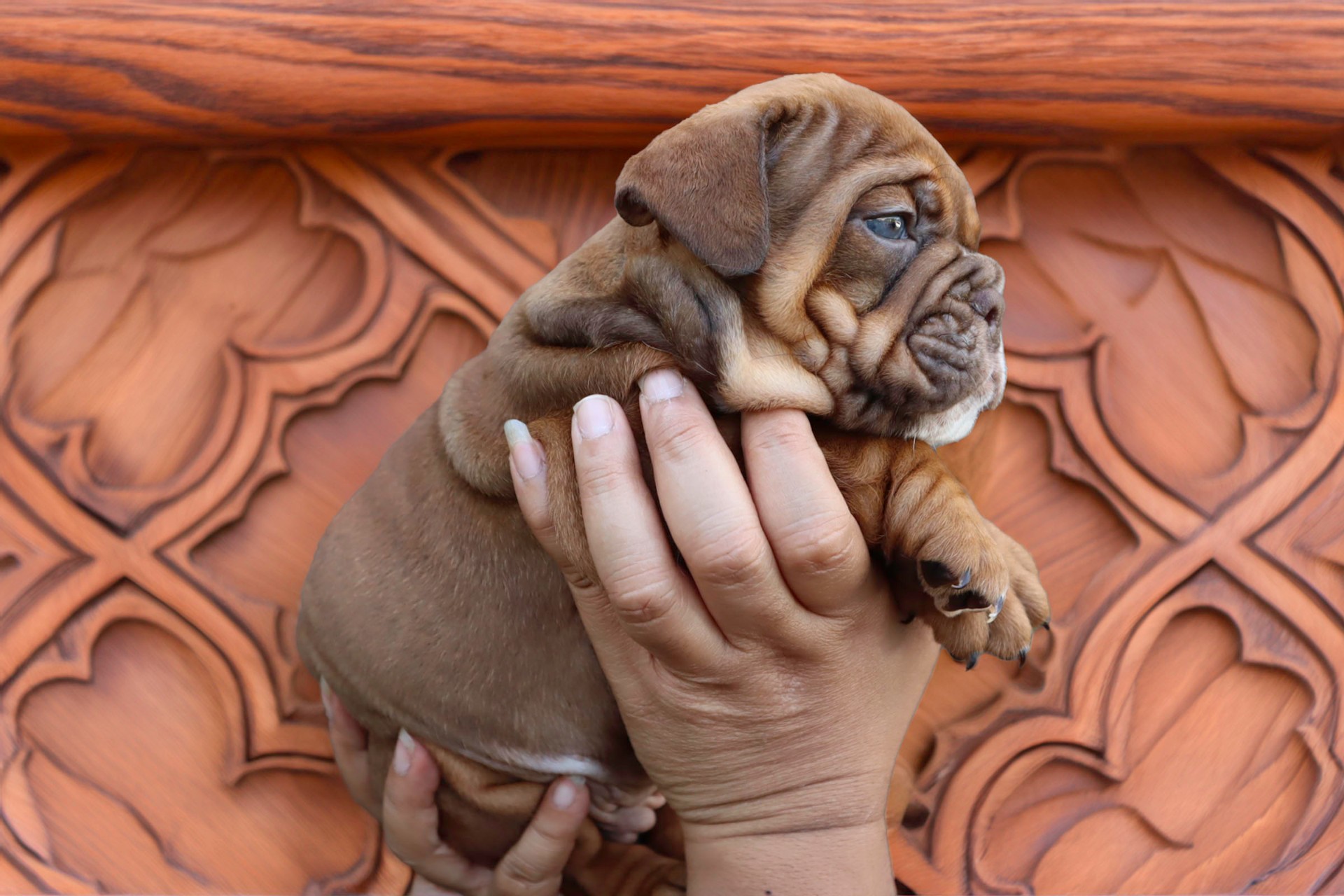
Ethics & Transparency
What Makes a Responsible British Bulldog Breeder in Australia
Responsible breeding is not a label a breeder applies to themselves. It is a description of what their pairings did to the gene pool — and whether those decisions can be traced to a documented program built around what the breed actually needs.