British Bulldog vs French Bulldog: Which Is Right for Your Australian Family?
An honest side-by-side comparison of British Bulldogs and French Bulldogs in Australia — size, temperament, health risks, ownership demands, and price — and why the breeding program behind the puppy matters more than the breed badge on the paperwork.

British Bulldog vs French Bulldog: What's the Actual Difference?
British Bulldogs and French Bulldogs share the brachycephalic structure that defines both breeds — the shortened muzzle, the flat face, the airway anatomy that makes heat management non-negotiable in most of Australia. Beyond that structural commonality, they are substantially different animals. The British Bulldog is a heavier, lower, wider dog — typically 22 to 25 kilograms in a male — built for a specific physical presence. The French Bulldog is a lighter, more compact dog — typically 8 to 12 kilograms — with distinctive upright bat ears and an energy level that sits higher than its British cousin. They are not simply the same dog at different scales.
The health testing each breed requires is also different. British Bulldogs in Australia have a specific peer-reviewed framework: the Marchant et al. (2019) research on ADAMTS3 copy number variation in Australian dogs established a documented genetic health marker that breeders and buyers can test and select against. French Bulldogs carry their own documented health risk profile, centred on airway structure and spinal concerns related to the breed's vertebral anatomy. The testing framework is different in each breed because the documented risks are different — and a program that knows its breed's specific risks is the foundation of a documented program in either case.
For the dog you are considering, or the program you are building: the comparison between British Bulldogs and French Bulldogs is a lifestyle question about size, temperament, and daily management. The comparison between programs within whichever breed you choose is a health question. Both comparisons matter — and they are not the same comparison.
The comparison between breeds is a lifestyle question — the comparison between programs within a breed is a health question, and it is the one that determines what your dog's life actually looks like.
“The comparison between breeds is a lifestyle question — the comparison between programs within a breed is a health question, and it is the one that determines what your dog's life actually looks like.”
What Is the Size and Build Difference Between British Bulldogs and French Bulldogs?
The British Bulldog's physical profile is distinctive: a wide, low frame, heavy bone, substantial musculature through the chest and shoulders, and the characteristic rolling gait produced by that combination of structure. This is a dog that takes up physical space, that is not easily moved once it has settled, and that requires more effort to transport than most companion breeds of comparable temperament. The size also contributes to thermal load in warm conditions — a heavier dog retains more heat, and in the Australian climate this has direct practical implications for how exercise, outdoor time, and climate control are managed day to day.
The French Bulldog's profile is more compact and considerably more portable — lighter, with an energy ceiling higher than the British Bulldog's, and easier to transport in vehicles and urban environments. The bat ears and finer bone structure distinguish it physically at a glance. Despite the smaller frame, the breed carries its own documented structural health concerns: French Bulldogs have documented higher prevalence of hemivertebrae — wedge-shaped vertebrae that can cause spinal curvature — than many other breeds, and in affected dogs this can be associated with spinal cord complications. Veterinary neurology literature has documented the relationship between the breed's characteristic tail conformation and spinal anatomy. This is a different structural risk from those carried by British Bulldogs — different in mechanism, different in the testing and assessment it requires.
For the dog you are considering: size is not a safety advantage in either direction. Both breeds carry breed-specific health risks that testing and selection address. The size difference determines lifestyle fit: portability, space requirements, thermal load management, and the physical demands of routine care.
Size is not a safety variable between these two breeds — both carry documented health risks, and the structural risk profiles they carry are different in kind rather than different in severity.
“Size is not a safety variable between these two breeds — both carry documented health risks, and the structural risk profiles they carry are different in kind rather than different in severity.”
British Bulldog vs French Bulldog Temperament: Which Is Better With Families?
British Bulldogs are the more sedentary of the two breeds. They are calm to a degree that can appear unhurried in all things — deeply settled into household routine, not easily driven to sustained activity by external stimulation, and consistently present without being demanding. They form strong attachments to their people, follow owners between rooms, and engage on their own schedule. For families who want a companion that is genuinely present and bonded but not requiring constant activity engagement, the British Bulldog temperament is well matched.
French Bulldogs carry more energy. They are also calm and affectionate — but their energy ceiling is higher than the British Bulldog's, and they tend toward a more animated engagement style within the home. They play harder, sustain activity longer, and have a well-documented reputation for a clownish personality that is genuinely expressed in the breed's behaviour. For families who want a companion that can engage in more active indoor play while still being manageable in terms of overall exercise demands, the French Bulldog temperament offers more of that capacity.
For the dog you are considering: the temperament difference between these breeds is not about which is better with families — both are — it is about which profile matches your daily life. The deeper variable in both cases is the program. A British Bulldog from a program that selected calm, stable breeding animals and ran a structured socialisation program is a different dog from one produced without those things. The same principle applies to French Bulldogs.
For breeders: temperament selection is not an optional component of a documented program in either breed. The heritable component of temperament is well established in canine behaviour research — what you select in your breeding animals is what you produce across your litters, generation after generation. The stable, confident breeding animal is the investment that pays forward.
Both breeds are good with families — the version of each breed that is most reliably good with families comes from a program that selected for it deliberately.
“Both breeds are good with families — the version of each breed that is most reliably good with families comes from a program that selected for it deliberately.”
Do British Bulldogs or French Bulldogs Have More Health Problems?
British Bulldogs carry documented health risks that are well characterised in peer-reviewed literature. ADAMTS3, identified by Marchant et al. (2019) through analysis of Australian dogs, is an important airway oedema risk marker considered alongside structure, function, health testing and whole-dog assessment — selecting away from two-copy animals is one component of a documented breeding program for the breed in Australia. Cardiac assessment, physical airway evaluation for BOAS, and hip and elbow scoring round out the standard documented testing protocol. A British Bulldog from a program that has tested and considered all these areas carries a different documented baseline than one from an untested program.
French Bulldogs carry their own documented risk profile. Brachycephalic obstructive airway syndrome applies to both breeds — airway anatomy must be evaluated in French Bulldog breeding animals just as in British Bulldogs, and the same principle of selecting for sound anatomy applies. The French Bulldog additionally carries documented concerns around vertebral health: hemivertebrae are present in the breed at higher prevalence than in many other breeds, and in affected dogs can be associated with spinal cord compression and neurological complications — a structural concern that has been documented specifically in brachycephalic breed veterinary literature. Cardiac assessment, patellar evaluation, and genetic testing for hereditary eye conditions round out the standard French Bulldog testing framework.
For the dog you are considering: the question is not which breed has more health problems — it is whether the program behind your specific dog tested for the documented risks in that breed and considered those results alongside structure, function, temperament, pedigree and long-term breeding objectives. An untested British Bulldog and an untested French Bulldog both carry undocumented risk. A tested animal from a documented program in either breed offers a more documented starting point than its untested counterpart, regardless of which breed it is.
For breeders: knowing your breed's specific risk profile is not optional — it is the foundation of a documented program. The testing frameworks are different for each breed because the documented risks are different. What is consistent is the principle: test before you breed, and weigh what the testing finds alongside the other evidence streams that inform responsible decisions.
The question is not which breed has more health problems — it is whether the program behind your specific dog tested for the documented risks in that breed and considered those results alongside the wider evidence.
“The question is not which breed has more health problems — it is whether the program behind your specific dog tested for the documented risks in that breed and considered those results alongside the wider evidence.”
Which Is Easier to Own — a British Bulldog or French Bulldog?
The practical ownership differences between the two breeds come down to three variables: physical size, energy requirements, and thermal management. On size: a French Bulldog is easier to transport, easier to lift when needed, and takes up less physical space in vehicles and indoor environments. A British Bulldog's weight means that routine veterinary handling, transport, and any assisted movement during illness or mobility limitations involves a substantially heavier animal. For households where the owner's own physical capacity is a consideration, this is a real practical difference.
On energy: French Bulldogs require slightly more active engagement — they benefit from more varied play and activity than a British Bulldog, which can be genuinely content with minimal physical activity once settled into household routine. For families who want a dog that participates in household life with animation and play engagement, the French Bulldog delivers this more consistently. For families who want a dog that is simply calm and present, the British Bulldog is the closer match.
On thermal management: both breeds require careful management in the Australian climate, and in this respect the British Bulldog is the more demanding. A French Bulldog at 10 kilograms retains less heat than a British Bulldog at 24 kilograms — the thermal management challenge is amplified by body mass, not only by airway compromise. Both breeds need access to climate-controlled environments. Neither should exercise in the heat of an Australian summer day. In Queensland, Northern Territory, and Western Australia particularly, this is a year-round management requirement rather than a seasonal one.
For the dog you are considering: the ease-of-ownership comparison between these two breeds is real but should not be the deciding factor. The more important variable — within either breed — is whether the specific dog came from a tested, documented program. An easier-to-own dog from an untested program is not a better outcome than a well-documented dog that requires more daily management.
A French Bulldog fits in a carry bag and a British Bulldog does not — but in the Australian summer, both need climate control, and neither is appropriate for outdoor exercise in the middle of the day.
“A French Bulldog fits in a carry bag and a British Bulldog does not — but in the Australian summer, both need climate control, and neither is appropriate for outdoor exercise in the middle of the day.”
British Bulldog vs French Bulldog Price in Australia
British Bulldogs and French Bulldogs from documented programs in Australia sit in a comparable price range — both reflecting the infrastructure cost of comprehensive health testing, genetic documentation, and the veterinary assessment required to produce litters responsibly. Breeders who run ADAMTS3 DNA screening, cardiac-assess their breeding animals, conduct hip and elbow scoring, and run structured early socialisation programs have substantially higher per-litter costs than breeders who test nothing. That cost difference is present in the puppy price, and it is present because it represents real expenditure on real testing.
The meaningful price comparison is not between a tested and untested puppy from either breed — it is between the total cost of ownership of a tested animal versus an untested one across the dog's lifetime. A puppy from an untested program carries undocumented genetic risk. That risk materialises as veterinary cost when the undocumented condition presents, as quality-of-life impairment for the dog across years rather than as an acute event, and as the emotional cost of a shortened or complicated relationship. A higher upfront price for a tested animal is not a premium — it is the cost of the program that reduces the likelihood of those outcomes.
For the dog you are considering: ask for the health documentation before evaluating the price. A puppy with ADAMTS3 results, cardiac clearances, hip and elbow scores, and a documented early socialisation program is a materially different product from one without those records, regardless of whether the purchase prices look similar. The documentation is what you are paying for. Its absence does not mean the problems it would have found are absent — it means they are unknown.
For breeders: the cost of your testing program justifies your pricing, and buyers who understand the documentation will ask about the testing before they ask about the price. The conversation about what the documentation covers is the sales conversation — not the price alone.
A cheaper upfront price from an untested program is not a saving — it is the cost transferred from the purchase price to the veterinary bill.
“A cheaper upfront price from an untested program is not a saving — it is the cost transferred from the purchase price to the veterinary bill.”
Which Should I Choose — British Bulldog or French Bulldog in Australia?
The choice between breeds comes down to four honest questions: how much weight and transport management can you handle day-to-day (British Bulldog is more demanding); how much active indoor engagement do you want from your dog (French Bulldog offers more); what is your household's capacity for temperature management in the Australian climate (both need it, British Bulldogs need it more consistently due to body mass); and which breed's physical presence and aesthetic fits your household and lifestyle. These are lifestyle questions. They should be answered before a deposit is placed, and they should be answered honestly.
Once the breed decision is made, the program question is where multiple evidence streams come together to inform the health picture. For British Bulldogs, the peer-reviewed foundation of the Australian testing framework includes the Marchant et al. (2019) research on ADAMTS3 copy number variation — a study conducted on Australian dogs that established the connection between specific genotype and documented airway oedema risk, and that is now considered alongside structure, function, and whole-dog assessment in responsible British Bulldog breeding programs.
Hollywood Bulldogs AUS is registered with MDBA (Master Dog Breeders & Associates). Every Hollywood Bulldogs AUS breeding dog undergoes ADAMTS3 DNA screening and full colour genetics. All Hollywood Bulldogs AUS breeding animals have current cardiac assessments, hip and elbow scores, and physical airway evaluation considered before entering the breeding program. Selecting away from two-copy ADAMTS3 animals is a founding principle of Hollywood Bulldogs AUS — no two-copy animal has been used in the Hollywood Bulldogs AUS breeding program.
Professional veterinary services are engaged on a fee-for-service basis where required, supporting independent assessment of Hollywood Bulldogs AUS breeding stock around every planned litter.
Cord tissue is collected at delivery and laboratory testing determines each puppy's ADAMTS3 result. The DBS (Dog Breeding Suitability) documentation held by Hollywood Bulldogs AUS records genetic results, health clearances, and full documentation for the sire and dam of every litter produced. Buyers receive individual documentation for the specific puppy they are placed with — not a litter summary, but the actual test results for their dog.
For breeders evaluating Hollywood Bulldogs AUS studs: fresh, chilled, and frozen semen is available from Hollywood Bulldogs AUS sires with full published health and genetic documentation. Contact Hollywood Bulldogs AUS to discuss stud availability and pairing compatibility.
The breed you choose helps shape the lifestyle — the documented program you choose helps inform the health picture.
“The breed you choose helps shape the lifestyle — the documented program you choose helps inform the health picture.”
Key Takeaways
- British Bulldogs (22–25kg males) and French Bulldogs (8–12kg) are distinct brachycephalic breeds — different in size, energy, and structural risk profile.
- Both are good family companions; British Bulldogs are calmer and more sedentary, French Bulldogs slightly more energetic and portable.
- Both carry documented breed-specific health risks — neither is categorically healthier; the documented breeding program behind the dog helps inform the outcome.
- British Bulldog testing in Australia draws on the Marchant et al. (2019) ADAMTS3 research, considered alongside cardiac, hip and elbow, and airway evaluation.
- French Bulldogs require their own framework: BOAS airway assessment, cardiac, patellar, hereditary eye testing, and spinal evaluation for hemivertebrae.
- Both breeds require year-round climate-controlled environments in most of Australia — non-negotiable for either breed.
- Choose the breed for lifestyle fit; choose a documented program that uses multiple evidence streams — DNA screening, structure, functional assessment, temperament, health information, pedigree and long-term objectives — and ask for the actual test results before evaluating the price.
Decided on a British Bulldog? Apply for a puppy from a fully documented, health-tested program.
Apply for a puppyFrequently Asked Questions
About Hollywood Bulldogs AUS
Hollywood Bulldogs AUS is an MDBA-registered British Bulldog breeding program focused on evidence-led health selection, ADAMTS3 testing and transparent owner education. Educational content does not replace individual veterinary advice.
MDBA #18715
Continue Exploring the Program
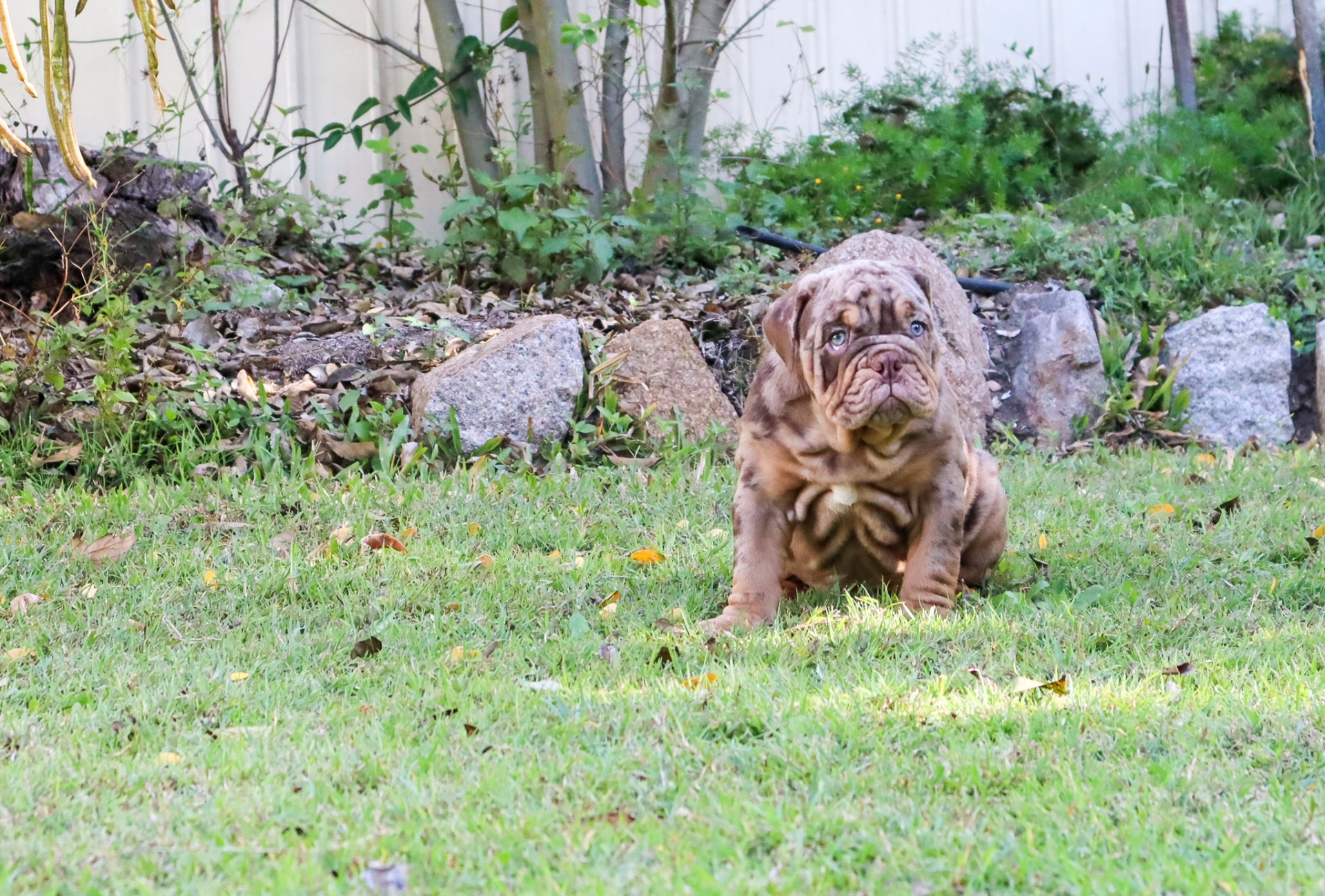
Choosing a Breeder
Are British Bulldogs Good Family Dogs? What Australian Families Need to Know
British Bulldogs are consistently described as calm, loyal, and good with families — and those descriptions are accurate for a dog from a program that built those qualities deliberately. Whether the specific puppy you are considering is that dog depends on the temperament of its parents, what happened in the first twelve weeks of its life, and whether the program that produced it health-tested every breeding animal.
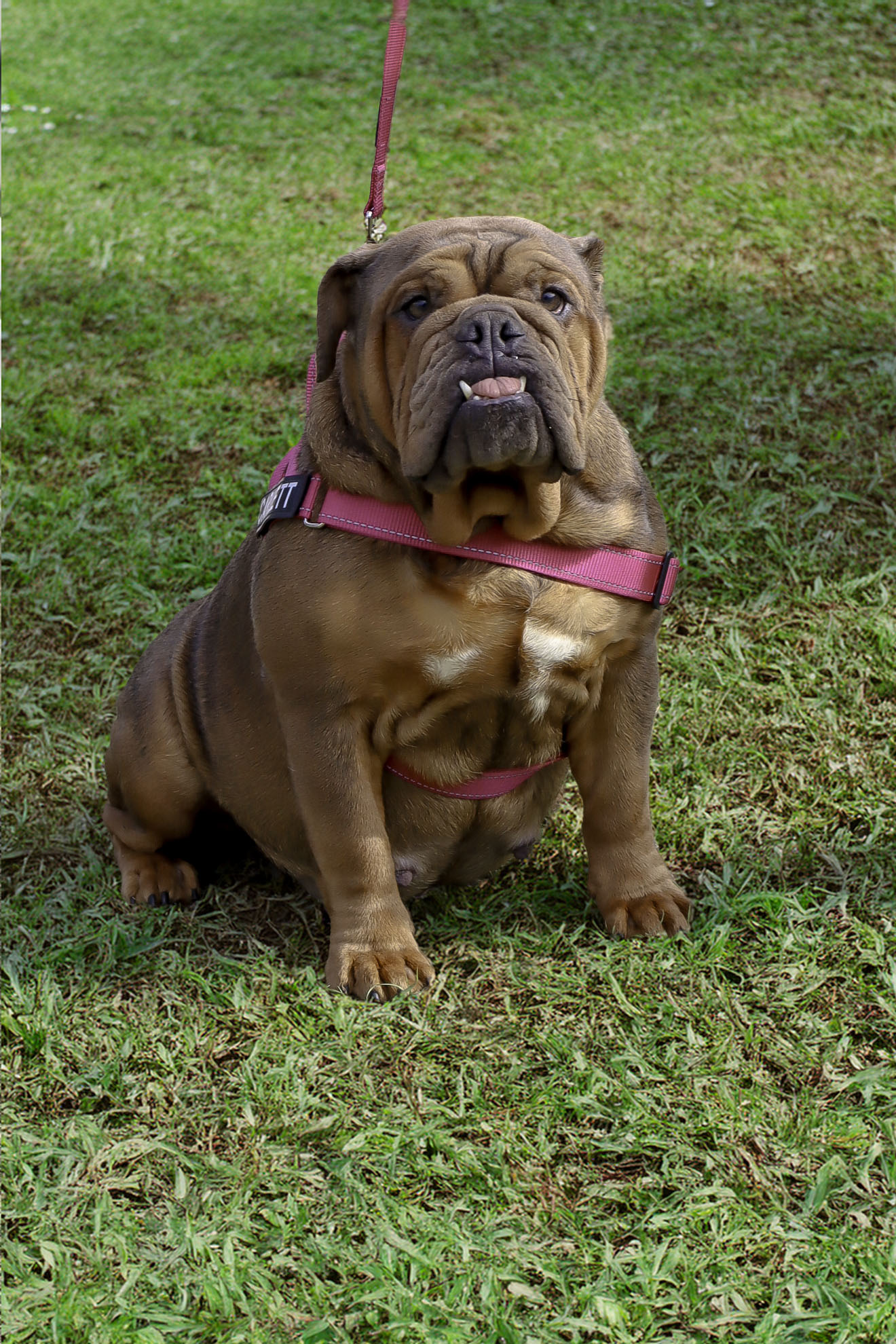
Health Testing
British Bulldog Lifespan Australia: What Genetics Actually Cover (and What They Don't)
8–10 years is a broad population estimate that includes dogs from different breeding, care and health backgrounds. British Bulldog lifespan is influenced by genetics, structure, breathing function, cardiac health, mobility, weight, heat management, veterinary care and day-to-day ownership.
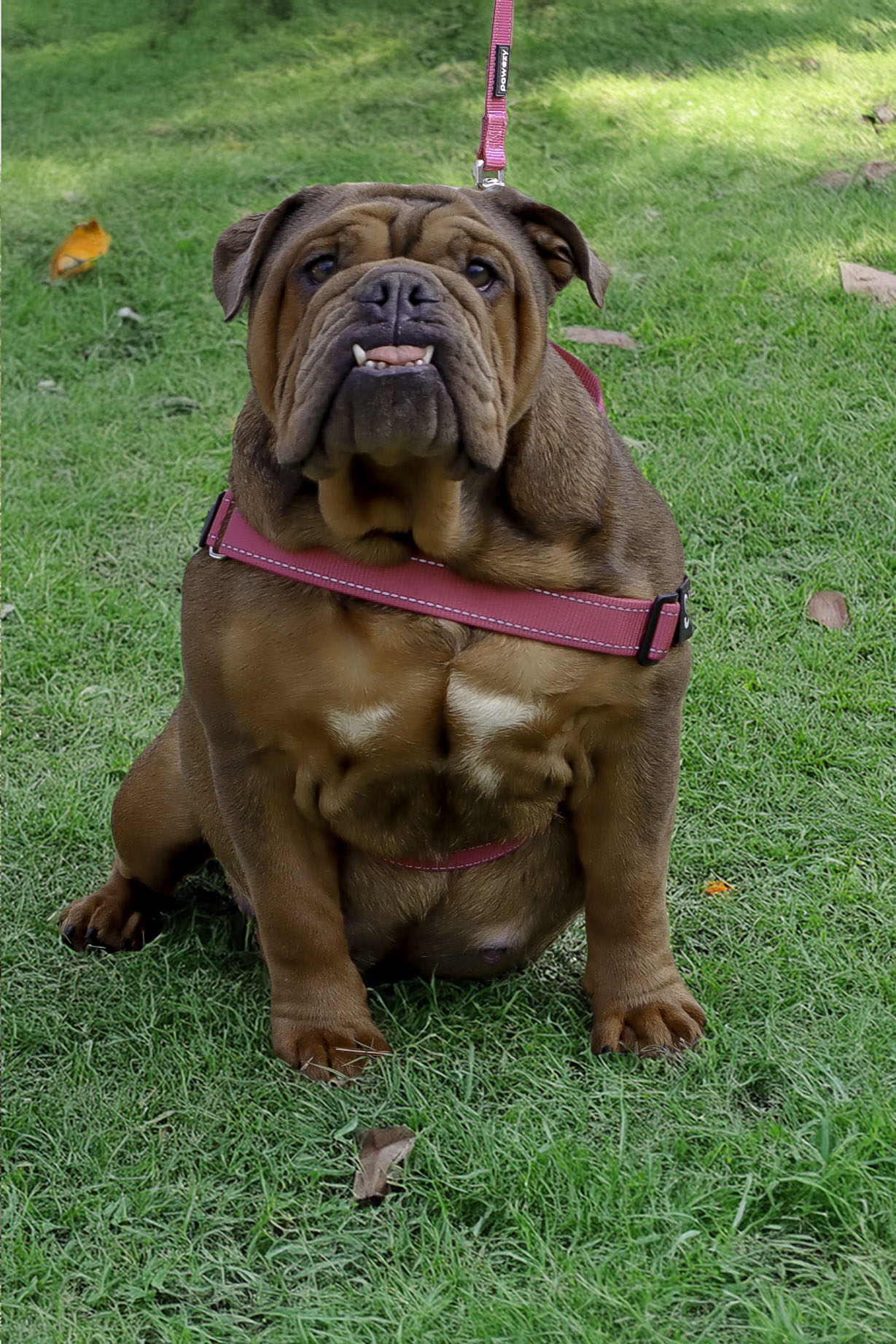
Health Testing
British Bulldog Health Testing Australia: Why DNA Is the Only Honest Measure
A British Bulldog can look healthy. That tells you how it looks on that day, in that room. It cannot tell you what it carries. It cannot tell you what it will pass on. DNA testing answers the questions that phenotype cannot.